Wednesday, June 30, 2021

EZ Blender Hummus, Closer Eying 4 Ease

The "EZ Blender Hummus" article and video pertain to the actual procedure for making a batch. I include info about some substitutions of several online recipes' ingredients for convenience. This article goes into more details and extra info about hummus considerations.

Note: "EZ Blender Hummus 2.0" YT video and blog article now available!

Chickpeas or Garbanzo Beans?

Ever wonder about the two bean names? When shopping for the beans, I had thought chickpeas and garbanzo beans were the same, but wasn't sure. "Chickpeas vs Garbanzo Beans: What's the Difference?" explains:

A chickpea or garbanzo bean both refer to a plant in the legume category with the scientific name Cicer arietinum. ... Garbanzo happens to be the Spanish term while chickpea is the common English term.

I became curious about "chickpea" as one word instead of two, and also what chick had to do with the bean. I could not find etymological reason for "chick". The chick relationship seems to be that chickens really like chickpeas. "Can chickens eat chickpeas?" states "Chickpeas are a great source of vitamins, minerals, and some other key nutrients. Plus, chickens seem to go for crazy for them".

Blender or Food Processor?

I used a very old blender because it's what I have, and no intention of buying a food processor. Turns out to be loads of recipes that use either appliance, even though I did a Google search for "blender or food processor for hummus"

"Blender vs Food Processor" dives deeply into contrasting the two appliances, not specifically for hummus, though.

a blender is a better option for items with a lot of liquid, like smoothies and soups. A food processor is best suited for foods that are mainly solid and require more labor intensive handling, such as chopping and slicing. However, since the line between food processor and blender has, well, blended, you can find high-end appliances that handle both tasks admirably.

In deciding the order of ingredients to blend, I felt smooth hummus was more likely if I blended liquids and powders first, then added the skin-removed garbanzo beans. The steps in "How to Make Hummus That's Better Than Store-Bought - Easy Hummus Recipe" seemed sensible for starting with mixing the liquids and powders, then adding the beans. (She added water later.)

Removing Bean Skins or Not

Some recipes advocate removing the garbanzo bean skins. The "Do You Need To Peel The Chickpeas?" section of "Easy Hummus (Better Than Store-Bought)" compares both batches, with pix, leaning towards skipping removal.

You can see, even from this photo that the skinless chickpeas made for a slightly smoother hummus, but in our opinion it really wasn’t enough of a difference to warrant ten minutes of skinning chickpeas.

Two sites make good cases for removing the skins for smoothness and also looks.

Using Bean Fluid or Rinsing Beans and Adding Fresh Water

A few commenters at "Homemade Hummus Dip" mentioned using the canned bean fluid (aquafaba) instead of fresh water. Retaining the bean fluid sounds good for enhanced flavor and ingredient conservation. OTOH, "Aquafaba: The Good, the Bad, and the Gassy" convinced me to, uh, start fresh—"aquafaba contains a compound known as oligosaccharides. ... The result is bloating and gas, ...."

Vinegar or Lemon Juice

I used vinegar because it's handy. I don't use lemons or lemon juice often so am hesitant to get them, then think about using up excess. In any case, "Substitutes for Lemon Juice" mentions white vinegar substitution is 1/2:1 ratio. If wanting to use lemon juice, "How Much Juice Is In One Lemon?" helps with lemon juice measurements: "if a recipe calls for 1 tablespoon of lemon juice, you’ll need to use about ½ a lemon".

Tahini or Sesame Oil

Tahini, a paste made with sesame seeds, is a main ingredient in hummus recipes. Weirdly, tahini is near peanut butters at my supermarket. Even though I bought some tahini, I decided to try subbing sesame oil. Some commenters at "Homemade Hummus Dip" mention using sesame oil, but only half as much as tahini.

Fresh Garlic or Garlic Powder

I didn't want to buy an entire garlic when I'd use only three cloves. Garlic would also need cutting up, chopping, slicing. or pulverizing. Powder form is much more convenient. "Garlic Substitutes" informs—"For 1 clove garlic, substitute 1/2 teaspoon minced garlic or 1/8 teaspoon garlic powder."

Olive Oil or Not

I omitted olive oil because so many of the recipes showed it as an after-recipe addition, which I've not seen at eateries. I used one less ingredient and avoided adding extra calories. For using oils other than olive, "These are the best substitutes for olive oil" lists the following substitutions and describes them.

  • Peanut oil
  • Butter
  • Ghee
  • Walnut oil
  • Sunflower oil
  • Canola Oil
  • Vegetable oil
  • Coconut oil

Freeze Hummus or Not

"Yes, You Can Freeze Hummus, but You Might Not Want To" provides Info for serving, storing, and freezing and thawing.

Informative Website for Several Hummus Considerations

"The BEST Hummus Recipe" covers four items I've floated: blender vs. food processor, removing bean skins vs. not, bean fluid vs. added water, and freezing or not. Another beany topic is soaked beans vs. canned. She used a blender, which appealed to me. Note: The quantities called for seem to be for a double recipe; 30 oz of beans is about two cans' worth of beans.

Additional Notable Hummus Websites

"THE BEST OIL FREE HUMMUS IN THE WORLD" provides a vegan, oil-free recipe (process start time about 1:40). The ingredients, which include the bean fluid, and blending procedure are straight-forward. With using a high-speed blender; the outcome somewhat resembles soft-serve ice cream, Storage in fridge is good for a week.

"Super Easy Hummus" provides a straightforward food-processor recipe in text and also embedded video link. The info is pleasingly compact. Excerpted: "I usually end up using about half of the bean liquid, so be sure to reserve it! ... Also, I like to let the flavors blend several hours or overnight before serving this."

"3-Ingredient Hummus Recipe from Nazareth" is a bit lengthy, and the ingredients amount to five. However, beans, tahini, lemon juice, salt, and water are as minimalist for ingredients as I've encountered in my recipe hunts.

"Easy Hummus (No Tahini)" calls for natural, unsalted peanut butter as a replacement for tahini. He uses a food processor that already contains chickpeas; thus, no determination if the beans are skin-removed or not. The simple process looks good, with ingredients captions, but is missing quantities.

"Simply Hummus Recipe | No Tahini No Olive Oil Hummus | Easy Homemade Healthy Hummus" provides the recipe (~ half portion, imho) in the description as well as video. Options for oils is informative. The sesame flavoring comes from seeds and oil. Note: "Jeera" is Indian for cumin.


Stuck Blender Blade? Check and fix!
video, article

Tuesday, June 29, 2021

EZ Blender Hummus

A few weeks ago, I spotted a post on LinkedIn that pointed to "Homemade Hummus Dip". Some comments gave me ideas for substitutions so I might avoid winding up with excess, seldom-used ingredients. I needed to click "Read Directions" button to see instructions, but was glad the website show both ingredient and instruction sections compactly.

My hummus recipe is blender based; numerous other recipes call for using a food processor. Some replacements, considering ease of use or longevity or both (varying ratios):

  • Vinegar (subbing for lemon juice)
  • Sesame oil (subbing for tahini)
  • Garlic powder (subbing for garlic cloves)

Vinegar

Most recipes call for lemon juice. One called for both vinegar and lemon juice. I used vinegar because it's easy. I wanted to avoid overtarting the hummus, so used less sour fluid than called for (2 tablespoons instead of 3). "Substitutes for Lemon Juice" lists the ratio of white vinegar to lemon juice at 1/2:1.

Sesame Oil

Two commenters at the "Homemade Hummus Dip" website mentioned substituting the tahini with half the amount of sesame oil. Besides using half the amount of sesame ingredient, fewer calories and fluid.

Garlic Powder

Fresh garlic seems to show up in all hummus recipes I looked into. Even though real garlic is more authentic flavor, I didn't want to buy an entire garlic. I'd need to peel off three cloves, then hassle with skinning them or smacking them with a blade to make skin removal easier. Chunks would also need cutting up, chopping, slicing. or pulverizing. Pouring garlic powder's easy—1/8 teaspoon per clove!

Omission: Olive Oil

I noticed that numerous recipes called for olive oil, added after making the hummus. I omitted it as unnecessary and extra calories, even if it is supposed to be healthy. (Eateries that I've gotten hummus at don't pour it on.)

I noticed that numerous recipes called for olive oil, added after making the hummus. I omitted it as unnecessary and extra calories, even if it is supposed to be healthy. (Eateries that I've gotten hummus at don't pour it on.)

Recipe Process

My video has the following sections in addition to overall info:

  • Ingredients
  • Implements
  • Bean processing (draining, rinsing, loosening and removing bean skins, re-rinsing and re-draining). (Skinning the beans makes for smoother hummus.)
  • Blending (liquids and powders first, then the beans)
  • Finishing up (pouring into server, sprinkling paprika, serving or storing, stats

Recipe Afterthoughts

The process for separating the beans from skins was more involved than I anticipated. Why remove the skins? "How I get the shells off cooked CHICKPEAS (easy) - Steven Heap" shows a method. The best reasons for skins removal is just before the 3-minute mark.

My bean skin removal process didn't go as quickly and thoroughly as I'd hoped. For making hummus the next time, I'll use a deeper, bigger bowl and strainer, and also use a slotted spoon and spatula.

The finished hummus (10 1/2 oz yield) poured out thinner than I expected. Best to use less fluid at the onset. Be mindful of amount of fluid called for and how substitutions might affect viscosity.

On the second day, water started to separate from the hummus. I scooped the thicker stuff for consuming anyway. Ob the third day, I poured the rest into my salad greens and tossed. Tasty!

Read "EZ Blender Hummus, Closer Eying 4 Ease", which includes additional details and extra info. 

Note: "EZ Blender Hummus 2.0" YT video and blog article now available!


Stuck Blender Blade? Check and fix!
video, article

Monday, May 31, 2021

Holey Pipes--Flute, Piccolo, Recorder, Fife, Pan Flute

Earlier this month, a classical radio station mentioned a program having recorders. "Recorder" had mystified me for a long time. I wondered why the term, when it didn't record. I also wondered about other single-pipe instruments that musicians blew into, such as flutes, piccolos, and fifes. As for pan flutes, each instrument has multiple, different-length pipes connected raft-like and is named for the mythological god Pan.

Orchestral/band flutes and piccolos resemble each other, the flute being a little over two feet long and the piccolo half the length. The fingering is on levers that cover holes. They're played so the pipes face sideways.

Recorders and fifes have holes for fingering. The fife is played sideways, air blown into the blowhole. The recorder gets played vertically, blown into as though it were a whistle. Recorders' lengths depend much on pitch, as shown in the recorder image at "Folk Flutes: Ocarinas, Recorders, Tin Whistles, and Native American Flutes". As for the fife, "Fife musical instrument" mentions length—"The modern fife, pitched to the A♭ above middle C, is about 15.5 inches (39 cm) long".

My image is of some sort of pipe instrument, but I don't know what. It measures 20 1/2" long, 1 1/4" diameter, has a blowhole and six finger holes. The bore is 3/4" diameter, ~2 3/8" deep from one end, ~18" the other end. It isn't a finger-lever band flute or piccolo, and not a vertical-played recorder. Though process of elimination would mean it would be a fife, one other possibility remains—a less formal flute as advertised:

Flutes seem to be the alpha instrument in my discussion about flutes, piccolos, recorders, fifes, and pan flutes.

"Handmade Bamboo Flute" shows a bamboo pipe with a blowhole (square) and 6 finger holes. However, the length, listed as "Approximately 12" long", makes it too short for my pipe to be that kind of flute.

"Make a Professional Sounding Flute for $1" shows another casual use of the word "flute", Coincidentally, it's inexpensively made. The note-tuning methodology, however, might be more difficult to manage.

Sites that Cite Multiple Pipe Instruments, Despite Website Titles

A music teacher at "Is a fife a flute, a piccolo, or something else?" provides a very succinct reply to cover three of the pipe instruments I wondered about: "First off, they are all flutes. The fife and the piccolo are the higher range of the flute family."

Christopher Smith, musician and teacher of music describes and contrasts the same three instruments in more detail:

“Flute” is the term (in English) for a transverse instrument (held sideways) that you blow across. Modern band and orchestra flutes are usually metal and have keys with a separate head joint, but that is a subset of the “flute” category. ... A piccolo (which is short for the Italian “flauto piccolo” or “small flute”) is pitched an octave higher than an orchestra flute, though it has almost exactly the same fingerings (it only goes down to D and when you get into the highest octave, the fingerings can vary from instrument to instrument). This is the instrument that is closest in sound to a fife, not because of its size but because the fife has a smaller bore ...

At "What is the difference between a fife and a flute?" a fife maker provides a helpful overview reply about flutes and fifes:

All fifes are flutes, and most flutes are not fifes. In particular the fife has 6 or seven holes, plays the diatonic major scale, with other half notes cross-fingered or ‘half-holed, played by fingers directly on holes. Fifes are held to the right and blown transversely.

"What Is a Fife?" shows a pic with three dissimilar fife examples. Comparison and contrast of the fife to recorder, flute, and piccolo:

The fife is a small woodwind instrument known especially for its high pitch and loud, piercing volume. It closely resembles a recorder in that it is typically made of wood and utilizes open finger holes instead of levers like the piccolo or flute. It is still reminiscent of the piccolo, however, in that it is held perpendicular to the mouth with the hands to the side, and the mouth does not touch the instrument but instead blows a stream of air through the mouthpiece.

The site also includes historical and usage information.

A subtopic for "What is the difference between 'a flute' and 'a pipe'?" addresses "What are the different types of flutes?" with pictures of musicians from different parts of the world playing recorders, whistles, vertical and traverse flutes, and a pan flute.

"What is a Fife? And how is it in comparison to the Flute/Whistle?" provides a glimpse of a fife description and contrast to similar instruments.

A fife is the mezzosoprano member of the flute family. Any transverse flute with a bell tone ranging from A to C is pretty much a fife. ... The modern fife has, in addition to the six finger-holes, 4, 5 or 6 keys. ... A fife is basically a piccolo without keys. ... The primary difference between any MODERN thing called a fife and any modern thing called a whistle is that the whistle is end blown and the fife is a side blown "traverse" instrument.

Flute

"The birth of the flute" provides overview history of the flute.
The term "flute" was originally applied both to pipe instruments held sideways and pipe instruments held vertically. Thus, the vertically held recorder was also called a "flute." Indeed, up until around the middle of the eighteenth century (the era of Baroque music), the word "flute" was commonly used to describe the recorder. To distinguish the transverse flute from the recorder, it was referred to in Italian as the flauto traverso, in German as the Querflöte, and in French as the flûte traversière-all of which mean "sideways held flute.

"Why is the flute played sideways?" explains:

Most of the woodwind instruments are played vertically. The player blows a stream of air down toward the floor. But the modern flute is played horizontally. ... Playing the transverse flute (sideways) allows the player to blow air across a hole in the lip plate, rather than into a mouthpiece or reeds.

If the flute were played straight, it would need to make sound like a recorder, ... The transverse flute has a wider dynamic range, meaning it can play much softer and much louder than a recorder.

Piccolo

"A tiny instrument with a tremendous history: the piccolo" provides basic history and description.

This high-pitched petite woodwind packs a huge punch. Historically, the piccolo had no keys, but over the years, it has transformed into an instrument similar in fingering and form to the flute.

"'Stars and Stripes Forever' with five piccolos" shows the gutsiness for five piccolo soloists when they move to front and center.

Fife

"Fife" displays a simple pic with labels for parts. The short description: "The Fife is a small flute, usually made of wood. It has a narrow bore, or wind channel, which gives a shriller sound than flutes used in orchestras." The embedded link to Beauty and the Beast YouTube video is a nice touch.

"Fife musical instrument" includes additional info and reiterates the bore and pitch—"small transverse (side-blown) flute with six finger holes and a narrow cylindrical bore that produces a high pitch and shrill tone."

"Historical Fifes" and "The traditional fife" provide historical info and show example pictures. Oldflutes.com emphasizes military association more than musiquemorneaux.com, and also shows "keyed" as well as holes-only fifes.

Recorder

"Why is a recorder called a recorder?" explains the instrument's name:

The word "recorder" comes from the Latin "recordari," which combines "re" (again) and "cor" (heart). The meaning was to record something by going over it in the mind, in the sense of learning "by heart.

"The Recorder is easy to play" shows a nice diagram that identifies parts and fingering positions.

"An Introduction to the Recorder" provides elementary info and an image that shows the association between pitch and size (sopranino, soprano, alto, tenor and bass).

Pan Flutes

This section pertains to the raft-configured instrument that has different-length pipes.

"What is a Pan Flute? - History, Origin & Types" explains:
A pan flute is a musical instrument composed of numerous pipes, lined in a row. ... The pipes are either of different length or are blocked at different points. Either way, when the musician blows across the top of the pipes, each one produces a different note.

"History of the Pan Flute" contains extensive info, although also includes some reasoned speculation.

After primitive man had produced sound by hitting things, he probably accidentally discovered sound production by blowing a pipe, stems of plants (reed or bamboo) or animal bones. The "one pipe pan flute" probably came first.

"Pan" (gods-and-demons.fandom.com) describes the mythology of Pan creating the multiple-pipe musical instrument:

Pan, not knowing which reed Syrinx was transformed into, took seven or nine of them and joined them side by side in decreasing length, thus creating his musical instrument that bore the name of the nymph.

During research about pan pipes, I ran across instructions for making such instruments using easily available items.

"How to Make a Panpipe / Pan Flute" provides pictures and instructions. "How to Make Pan Pipes" describes (accompanied by illustrations) three methods—PVC, straws, and bamboo.

View and select YouTube video links to DIY panpipe projects that use drinking straws.

Additional Resources

Visit the following sites for yet more content and images.

Tuesday, May 25, 2021

8 Caterpillars and Inchworms from April 11-17 2021

These eight critters that I imaged in the neighborhood between April 11 and 17 had fascinated me but also mystified me. Inchworms are a subset of caterpillars. Seems that the locomotion means indicates which animal is which. Viewing video movement is a lot more helpful than viewing still captures. I looked up anatomy and diagrams, then viewed videos that contrast inchworms and caterpillars.

Overall Contrasts Between Inchworm and Caterpillar

"Inchworms" explains the familial relationship and big-picture contrasts.
The common name "inchworm" applies to a large group of caterpillars that includes many different species of moth larvae. ... In different regions throughout the United States, the common name inchworm may apply to native and non-native leaf-feeding caterpillars also known as spanworms, cankerworms, loopers, moth worms and measuring worms.

Common caterpillars have a series of true legs and fleshy "prolegs" that support movement from head to tail. In contrast, inchworms have true legs at the front and prolegs at the rear with a legless expanse in between. To travel forward, inchworms take it one end at a time, as though they're measuring their route. First, the rear moves forward, causing the legless midsection to arch or "loop" up. Then the inchworm lifts and extends its front end, and the rear begins to move again.

"Inchworm Identification" explains:

They're the larval stage of moths of the Geometridae family. ... The easiest way to identify inchworms is by their movement. Inchworms, also called cankerworms, bend their smooth bodies upward in the middle, bringing their hind prolegs up to meet their front true legs -- the legs that will remain in adult moth form -- then pushing their front legs forward to extend their bodies again. It looks almost as if the worms are measuring the tree branch as they walk.

Mysterious Matchhead-esque Caterpillar/Inchworm

I recorded the half-inch critter April 11 and uploaded it to YouTube https://www.youtube.com/watch?v=B5_wI76Za4E, requesting some ID help. I received suggestions that don't seem to have panned out (Indian moth larva, fungus gnats). Looking online yielded close-but-no-cigars images. I did run across other prospective topic critters, such sawflies, maggots, and grubs. "What Are the 5 Types of Insect Larvae?" provides a good overview of wormy larvae types. For that matter, the Scarabaeiform ("grub") bore a head and body color/shape resemblance, but the rest of the description, nah.

Two Days, Two Inchworms

I recorded one on April 13, and the next one on April 14. No doubt, with their moving forms and also distinctive hind areas that resemble miniature hippo bodies and chunky, trunky legs.

Trapeezy Caterpillar, I Presume

Another April 14 capture, the critter was in suspension and view. The slowed-down clip seems to show glimpses of legs on the entire body length, so I concluded it was a caterpillar. I still waffle over whether I saw caterpillar legs or not. A video that accompanies mid-April "Central Texas caterpillars are out, but only some could potentially destroy your garden" shows a trapezey critter that definitely is an inchworm. OTOH, Google images and Shutterstock [] show trapezey critters that could be non-inchworm caterpillars.

Disheveled-looking Critter

It was not my most elegant capture (April 14), but interesting enough for me to attempt to ID it. The closest critters I thought it might be were "asp caterpillar" or "puss caterpillar", hairy like toupees, and dangerous to touch.

Little Critter with Bulbous Head and Hindsection

This final capture for April 14 was about the length of a pinky fingernail. It wasn't much of a mover, but just enough undulation to indicate it was a caterpillar.

Spasticky Caterpillar

This critter bounced around, then went on the straight and narrow, along a length of grout. I was able to view enough legs and motion to conclude it was a caterpillar, not inchworm.

Jadelike Caterpillar with Measuring Stick

This caterpillar was the critter I was most prepared to capture. After I placed a 4-inch ruler near it, it edged closer so I could record it in real time for distance. The color reminds me of light green jade.

Additional Meandering Buggy Resources

Additional Meandering Resources Pertaining to the Matchhead-esque Critter


Related:


Friday, April 30, 2021

Thread-leaf Agave in Fall 2020--Blooms, Bees, and Beyond

Also view "Thread-leaf Agave in Fall 2020--Emerging Stalk and Buds" video (12:19 runtime).

My observations of this thread-leaf agave with emerging stalk was October and November 2020. The October video's images are from October 7 through 29, ending with progressively denser bud clusters. For more info about this time period (emerging stalk, buds, similarity to Queen Victoria agave), read "Thread-leaf Agave in Fall 2020--Emerging Stalk and Buds".

My video's images are from November 3 through 20, which include blooms and bees, and also noting the increasing leftward lean of the stalk. (The final segment compares the lean over time.) I recently strolled to the area and saw bare ground, as though the plant was never there.

Filifera vs. Schidigera Agaves, Close Relatives

In researching my subject plant, I looked at several websites for differences between filifera and schidigera. Best help came from some sites that included descriptions and pix of both agaves.

"Agave Filifera Care: Growing Thread-Edge Agave Plants", mentions both filifera and schidigera being from the Asparagaceae family. Differentiation statement: "You can tell these two Agave plants apart as Agave filifera has less conspicuous and finer hairs on its leaves."

"Agave Care, Photos & Varieties" has a gallery of filifera, schidigera, and numerous additional agave types.

Ruth Bancroft Garden and World of Succulents each have separate webpages for filifera and schidigera, with descriptions and images.

From "Plant Highlight: Agave filifera":

  • flower coloration: "stalk, buds, stamens and pistils are all dark purple or wine-colored, the face of the flower is a pale yellow, though it too may be flushed with purple"
  • rosette-leaves: "sharp-tipped leaves are 6 to 12 inches"
  • stalk: "6 1/2 to 8 feet tall"

"Plant Highlight: Agave schidigera"

  • flower coloration: "pale yellow"
  • rosette: "2 to 2 1/2 feet across"
  • stalk: "8 to 15 feet [high]"

"Agave filifera (Thread Leaf Agave)"

  • flower coloration: "yellowish-green to purple"
  • rosette: "up to 3 feet [across]"
  • stalk: "up to 11 1/2 feet [high]"

"Agave schidigera"

  • flower coloration: "greenish-yellow"
  • rosette: "up to 2 feet [across]"
  • stalk: "up to 10 feet [high]"

Thread-leaf Agave in Fall 2020--Emerging Stalk and Buds

Also view "Thread-leaf Agave in Fall 2020--Blooms, Bees, and Beyond" video (13:30 runtime).

Early October 2020, I spotted an agave with an emerging stalk (about 7' high). Also, the ballish shape of the leaves ("rosette") caught my eye. I've seen numerous agaves sprout stalks in spring. By the time I identified the plant as a thread-leaf agave, I found info about the stalk emergence and timing:

From "Thread-leaf Agave
Agave filifera subsp. schidigera
"

At maturity, in late summer, it produces a flower stalk that reaches eight feet or more with attractive purple blossoms that occur on the upper part of the stalk.

From "Agave Filifera Care: Growing Thread-Edge Agave Plants"

When mature, Filifera will bloom by sending up a 6’ to 8’ foot long flower spike from the center of a rosette. There is no set time of year for this event to occur.

Incidentally, for excellent images and descriptions, visit "Agave filifera (Thread Leaf Agave)" and "Plant Highlight: Agave filifera".

I visited the plant several times during October and November, taking pix and recording videos. In readying for images and video clips, I decided to create two videos. This video (with October images) features the start of the emerging stalk and progressively denser bud clusters. (I even captured a gathering of deer.)

First Impression (Incorrect), Queen Victoria Agave

Initially, i thought the agave was a Queen Victoria agave. The base was ball-shaped, with short, arced leaves such the pic at "Queen Victoria Agave". In 2012, I had spotted a newly planted one with a small plastic ID stake. So cute that I took couple of pix and made a composite. 

I noticed when poring through online images that the somewhat spherical base ("rosette") had thread-like fibers, and that the leaves were pointy like yucca leaves. It turns out that my subject plant is a thread-leaf agave, aka filifera. 

Websites that Show Both Queen Victoria and Thread-leaf Agaves

November Observations of Thread-leaf Agave

The other video (with November images) features blooms, bees, and post-bees, with noticing the increasing leftward lean of the stalk. (The closing section shows comparisons of the lean over time.) I recently strolled to the site and saw bare ground, as though the plant was never there.

The article WRT November 2020 agave images contrasts the filifera to a close relative, the schidigera, both part of the Asparagaceae family.


Wednesday, March 31, 2021

A 2021 Century Plant's Unfortunate Life Cycle

On January 18, I spotted the agave with an emerging stalk. (Speculating it started its growth maybe the previous week.) Its timing seemed way earlier in a year; many others I've observed seemed to start in early March. Furthermore, it was yellowy rather than green. After a few more pictures, mostly weekly (last one on Feb 8), the February deep freeze hit.

The deep freeze interrupted my attempts at Monday pic-taking for nearly two weeks. By the time I took a pic on Feb 20, I saw that the stalk had been cut part way, and half the leaves limp. Between that day and March 21 (3 1/2 weeks, I was preoccupied with taking post-thaw pictures elsewhere.) Anyway, visits on March 21 and more recent were disappointing—bottom leaves amputated, the stalk cut even shorter, and browning of the plant overall.

A few years ago, I'd seen agaves with leaves cut very short. Shortly thereafter, the plants would gone. In one instance, I'd see it looking weaker before it was removed. Because I never got to see recovery, I thought maybe leaf removal was like amputating limbs and interrupting nutrient flow. Also though that the exposed cross-sections might attract disease or pests.

Trimming Agaves for Pineapple-look Effect

The final plant pix show severely trimmed leaves, but not quite as "pineapple-y" as other cut-leaf pix I've seen online. I then thought to Google for agave pineapple cuts or similar. Some resources on the look, practice, and finger-waggings:

"The Pineapple Cut" shows images of agave leaf trims. One main effect is lessening the plant's diameter.

"Pruning Cacti and Succulents" advises in the Agaves section:
Never "pineapple" an agave (removing live leaves all the way around the circumference of the plant leaving only a tuft at the top), as this renders the plant susceptible to sunburn, insects, disease and rot. If you must prune dead leaves, eliminate only the bottom layer. Removing the pointed tips is also not recommended, mostly for aesthetic reasons.

"Detrimental Agave Trimming continues…" describes the decorative pineapple trimming and presumed reason.

The origin of agave trimming came from the harvesting of agaves for the production of tequila and mescal in throughout various parts of Mexico. This practice is performed when the plants are ready to be processed at the distillery a time when all the leaves must be removed for transportation purposes. ... Not having the bottom leaves weaken agaves and they becomes susceptible to diseases and snout weevil attack. Other lower leaf functions include protecting the plant trunk and the roots from the inclement sun.

Related: "So THAT'S Where Tequila Comes From" describes a company's tequila-making process using blue agaves. One pic shows leaves trimmed so the plants resemble pineapples.

General Agave Trimming Advice, 2021 Freeze, Freeze Advice

"Some of the leaves on my agaves are damaged. Can I cut them off? If yes, how can I prevent the wound from becoming infected? ..." advises care in task preparation:

the sap of the agave can be caustic and cause skin and eye irritation; we would suggest wearing goggles when you cut.

first get rid of that long spine that's ready to get you in the knee or eye. Then, decide if you want to cut farther down on that leaf or leave it to callus over. When you have trimmed back all the leaves that are damaged, you will probably want to keep the shape of the plant by trimming equally all the way around. Work up from the soil level, row by row, as needed. Remember, as formidable as they are, these plants are succulents and can take quite a bit of abuse and still heal.

bacterial infection can enter the plant through wounds. Ordinarily, the plant will take care of that itself by callusing over the cut when the agave is trimmed.

"Austin Texas 2021 Winter Storm - Deep Freeze Aftermath" brings back memories of freeze-shocked plants. An agave view comes in about the 30-second mark.

"How to Help Succulents Survive Rain, Hail, Frost" details prevention of frost damage ahead of time using cloths and screen material. An informative section about agaves about their cold-damage looks comes comes just before the 2-minute mark. The video might actually be helpful in case the ice age sneaks back shortly, or makes a return trip another season.

Friday, March 26, 2021

Feb 2021 Deep Freeze to Aftermath Images

The time period between February 11 and February 23 was exciting for the snow, ice, and cold, especially for power outages and boil-water status. Eventual return to pandemic normalcy was welcome. "What Really Happened During the Texas Power Grid Outage?" (Mar 23, 2021, runtime 16:47) is an informative video that described the deep freeze. It has loads of info about power grid, events, images, and animated graphs. The YouTube description also includes good content and links. A nice touch at end of video requests that commenters be respectful.

Environments outside were pictureworthy. I needed to take a few pix through windows, unwilling to venture into such bone-chilling cold and also risk ruining my camera. I created several composites and organized into groups that show ice, snow, and aftermath. Images are loosely organized as follows, but also include related items:

  • Snow, ice, damages to tree branches and other plants
  • Neighborhood walk February 12 (day after a big snow dump)
  • Neighborhood walk March 11 post-thaw
  • Additional related miscellany

I poked around the web for determining post-freeze damages for some plants. Also stumbled on some plant info I hadn't known before, and some that reinforced info from previous research.

Deep-freeze Damages

Two sources are from February 25, but seem to have content that describes the aftermath of the freeze.

"Were your plants damaged by the freeze? Here’s what to do next." includes a video that reiterates the article's text. It's San Antonio-centric, but looks applicable for Austin also. "Dead or dormant? How to tell if your plants survived Texas' winter blast" includes pix and info about damaged prickly pear and other cacti, palms, and sagos.

"Austin Texas 2021 Winter Storm - Deep Freeze Aftermath" from March 1, 2010 showed a homeowner's plants with snow and afterwards. Interesting to see how damaged some of the more deserty plants looked.

Some Plant Resources

The ones nearest and dearest to my heart for this article are sago, tree cholla, and cinnamon cactus. Pic'd in the video, but unmentioned in this section, are thread-leaf agave, photinia, and prickly pear.

Sago

"Cycas revoluta - 'Sago Palms' How to grow them from seed" provides good pix contrasting male & female characteristics. A more detailed, more caution-oriented resource is "How to Care for a Sago Palm (and Why They Are So Difficult)". "Cycads in the Landscape", like the other two sites, has loads of details. For a casual visitor, the illustration and characteristics identifiers are helpful.

The following videos are sago-owner oriented:

"How to Prune a Sago Palm" didn't provide much in the way of images, but caught my eye with bulleted advice:

  • Sago palms are toxic, so wear gloves and be careful when touching the plants. Also don’t let your animals near them or to eat them.
  • Prune from the bottom up, clearing the fronds at the trunk by 6″ to 2ft. These are the oldest and lowest leaves and it helps increase air flow.
  • Only remove completely dead and damaged fronds. Cutting healthy fronds can weaken the plant, but you can expose the trunk of the palm for ornamental purposes by removing extra fronds.
  • Don’t trim sago palm fronds that are between 10 and 2 o’clock positions.

Related, "Is My Palm Tree Dead?" has lots of helpful info in the description box.

Tree Cholla

I asked for help in IDing an unusual deserty plant. "cholla" bubbled to my consciousness. I stumbled upon "jumping cholla", which didn't resemble the plant much. Shortly afterward, I received suggestions of "tree cholla" (Cylindropuntia imbricata), at Wikipedia and World of Succulents.

Definitely tree chollas are not to be confused to jumping chollas (Cylindropuntia fulgida). Visit "Flying cactus? 10 terrifying things you must know about jumping cholla - ABC15 Digital". Also, the YT link for "dangerous chollas" shows scary thumbnails! In any case, the post-thaw pic in the video looks good and green.

Cinnamon Cactus

Such a cute plant cluster, resembling miniature prickly pear "paddles"! I did Google image search with that description in mind. When I stumbled on a candidate plant, I spotted an image of a cinnamon cactus. The page at "World of Succulents" even parenthetically refers to it as "Cinnamon Bunny Ears". One image in my video contrasts the iced-over plant with the post-freeze thaw. As the homeowner scraped most other deserty plants, time will tell if it survives.


Related: "2023 Ice 'N' Arborgeddon" article | video


Sunday, February 28, 2021

Fresh Fruit Lineup Between Store Trek Cycles

My store trek expedition cycle used to be seven days, usually Sunday. Since about mid-March 2020, about the same time of SXSW cancellation and nearing Spring Break, the cycle has approached two weeks. It was one way to reduce trips to the store and also reduce risk to coronavirus. Plans for obtaining vittles became more focused for types of items.

Nod to Fruits and Vegetables

Fruits and vegetables became more of focus for healthful eating. Frozen vegetables were appealing for easy buying and preparation: canned have lots of water, and fresh are more labor-intensive. As for fruits, frozen seem to have less variation or taste than fresh. Canned tends to include lots of fluid (syrup), with varying quality (mushiness to woodiness). For fruit, fresh has become the primary choice, with canned as secondary for some variety or fill-in before a subsequent store trek.

My lineup of fruits per store trek cycle: grapes (usually red or black), bananas, pears, cantaloupes, and honeydews. I have learned that scheduling them in for consumption requires awareness of when they're edible or require additional ripening, portions yields, and how long they might last in storage. (See table farther down for guide. Consider creating a similar table for the fruits you consume.)

Grapeful

I didn't get on board with grapes until the last couple of years, maybe. Best thing about grapes is ease of rinsing and storing. And they're ready to eat the first day—no ripening time needed like pears and melons.

Though We Have Some Bananas

We tend to pick very green ones and have them turn yellow and ripen for a few consecutive days' eatings. Tastiness seems to extend about 4 days. Then it's a rush to finish them before they get too mushy.

Pearish the Thoughts

Google results for "ripen pears" show that many pears in stores are not yet ripened, how many days till ripe, and how to speed up the process. They tend to feel apple-hard. I've waited about three days, rotating end to end to sense the fruit is slightly softened.

Melon Calleez

In the distant past, I'd had great luck with honeydew melons. For awhile afterward, I kept thinking they didn't taste right. Gave up on them for several years. Was ho-hum about cantaloupes. Have gotten better at sensing ripeness for consumption timeliness.

"When and How to Harvest Cantaloupe, the Sweetest Garden Candy" provides good info about ripeness, although I myself am not inclined to growing any myself. View lots of pix to see what cut ripe cantaloupes look like.

"How to pick a PERFECT Honeydew!" is a nice video. Unfortunately for me, my store's honeydews resemble the unripe one. For some time, the ripening time seems to be around 9 days. (Good to pick as unblemished melon as possible.) This most recent time was 16 days. I wouldn't have normally waited so long, but winter power outages, boil-water status, and aftermath nudged me to reprioritize. Results were great! BTW, not necessary to take the video's advice on cutting it; try different cutting methods.

Cleaning Preparation for Fruits

Yep, gotta get rid of stuff that hitchhikes on fruit, which can make you unwell. Clean appropriate areas before cleaning the fruit. Running water is your friend. Start off with surfaces and support items (strainers and similar), then the appropriate fruits.


  1. Clean sink before placing fruits in them.
  2. Peel off product stickers if any.
  3. Have a clean strainer or upper dishwasher rack (recommended) handy to place washed/scrubbed fruits.
  4. Rub bananas under running water and place between rack tines for draining.
  5. Scrub melons with vegetable or nail brush under running water and place atop rack tines for draining.
  6. Scrub pears similarly to melons.
  7. Use towel(s) to finish drying fruits and place them in fruit bowl(s).

Grapes, Different Preparation

Bagged grapes require plucking. A strainer is a better washing and draining container than dishwasher rack.

  1. Pluck grapes into a clean strainer atop cleaned sink.
  2. Rinse them under running water, lightly tossing them.
  3. Pour into container that you can drain excess water, or place a holey drainer or inverted smaller lid.
  4. Refrigerate. (They're ready to eat immediately.)

Fresh Fruit Lineup Table (YMMV)

Because the fruits have differing edibility/ripeness, you can knosh on different fruits. If you run out of fresh fruit, or want to vary flavors, you can also eat canned fruits or applesauce. Note that much of processed fruits come with liquids that reduce the amount of actual fruit—possibly less nutrition and economy. Frozen fruits are another option to supplement fresh fruit.


Note: I rotate the waiting-for-ripening pears and melons end to end daily until time to "harvest". In a weird way, I'm familiarizing myself with the fruits, looking for possible emerging/expanding defects and emerging soft spots ("give") as cues. Before cutting, I scrub them again.

Fruits Skipped in the Fresh Fruit Lineup Table

  • Apples
    Though I didn't mention them, I think rinse, wipe, and eat are 'nuff said.
  • Strawberries
    I used to buy them when they were $2/pound box, but wearied of more labor-intensiveness for little yield.
  • Peaches
    They've been occasionally fun, but ripeness is short-lived. Messy eating, too.
  • Watermelons
    Love them, but currently impractical because its size would compete with other fridge items. Had bought seedless ones, could last a month. Visit "Watermelon Pick N Cut" (article, video). A friend warned me about her experience with "personal size", so I've not tried any.
  • Pineapples
    Really like pineapples, but have concluded that canned pineapple chunks are way more economical (price, yield/can) and less labor-intensive than fresh. In any case, feel free to visit "Pineapple Slicing/Coring Gadget--Beyond Use Recs" (article, video).
  • Plums
    Have not eaten any in many years. Might retry soon.
  • Citruses
    Not in consciousness recently. Rinds don't appeal (grin) much to me.

May your meals be fresh-fruitful and healthful.

Wednesday, February 10, 2021

Can't Rush Fall Leaves v3


Another version of "Can't Rush Fall Leaves"? Yes! The first version had a spoken intro, real-time and speeded-up clips, in some ways, conveying a hurry-up message. The second version excluded snow days and intro. This third version includes all seven days with various excises and accommodating speedups, but none at 4x.

  1. V1 has speeded up clips for 1/10, 1/11, and 1/24.
  2. V2 omits the intro, 1/10, and 1 /11 (snow days) clips.
  3. Snow daze has only 1/10 and 1/11 real-time speed, no audio.
  4. V3 omits the intro, real-time speed for 12/29, and 2x speed for the other 6 days. (Had further trimmed down 1/10, 1/11, and 1/24.)

Had I chosen to include all 7 days clips with real-time speed, the video would have been around 6 minutes, maybe not so good with a ~3 minute song. Repeating the song also hardly seemed sensible. Even with extra trimming and speedup for v3, I wound up with excess video. Briefly considered adding refrain, but decided against it.

I decided the snowdaze video could stand alone to acknowledge the unusual snow conditions in Central Texas on 1/10 and 1/11. While walking on the day of leftover snow, I spotted about 8 snowmen of various sizes and shapes. Natch, they weren't in first-day freshness condition. I bet lots of kids enjoyed building them, and parents enjoyed recording the moments.

The following table summarizes the similarities and differences, particularly clip durations for the dates.

 Original song info:

Song: You Can't Hurry Love
Artist: The Supremes (redo by Phil Collins)
Writers: Edward Holland, Lamont Dozier, Brian Holland
Music: "You Can't Hurry Love - The Supremes | Karaoke Version | KaraFun", Feb 7, 2012, https://www.youtube.com/watch?v=tnqE7FRxV-s


Related, parody of Neil Sedaka's "Breaking Up Is Hard to Do":
"Raking Leaves Ain't Hard to Do (with scrolling lyrics)" (video, article)
"Raking Leaves Ain't Hard to Do (widescreen)" (video, article)

Friday, January 29, 2021

Can't Rush Fall Leaves v2 and Snow Daze

This article has the unusual feature of linking to two videos rather than only one. For "Can't Rush Fall Leaves, Parody of Can't Hurry Love", I had speeded up clips for January 10, 11, and 24, maybe conveying attempts to hurry fall leaves. I decided to leverage the video but still retain all of the images.

I created two separate videos from the leveraging:

  • Can't Rush Fall Leaves v2 [link], [runtime]
    • Removed introduction text and audio.
    • Removed snow day clips for January 10 and 11.
    • Replaced January 24 4x-speed clip with real-time clip.
  • Snow Daze January 10 and 11, 2021 [link], [runtime]
    Used only snow day real-time clips for January 10 and 11 (no audio, lyrics).

Original song info:

Song: You Can't Hurry Love
Artist: The Supremes (redo by Phil Collins)
Writers: Edward Holland, Lamont Dozier, Brian Holland
Music: "You Can't Hurry Love - The Supremes | Karaoke Version | KaraFun", Feb 7, 2012, https://www.youtube.com/watch?v=tnqE7FRxV-s


Related, parody of Neil Sedaka's "Breaking Up Is Hard to Do":
"Raking Leaves Ain't Hard to Do (with scrolling lyrics)" (video, article)
"Raking Leaves Ain't Hard to Do (widescreen)" (video, article)

Wednesday, January 27, 2021

Can't Rush Fall Leaves, Parody of Can't Hurry Love

Not sure when leaves start falling, though autumn officially starts late September. I hadn't thought to take pix or record autumn leaves and trees until late December. During raking around then, I thought of parodying "Can't Hurry Love" with initial title of "Can't Hurry Leaves". Refined it to "Can't Rush Fall Leaves" to match syllable count. I took pix and recorded clips on the following dates:

December 29, 2020
January 1, 2021
January 4, 2021
January 9, 2021
January 10, 2021 (snow day, imaging through glass)
January 11, 2021 (leftover snow)
January 24, 2021 (foggy, still leaves on trees)

Partial listing of my lyrics:

I feel glum some with autumn leaves,
And I been raking before Halloween.

A gardener said,

You can't rush fall leaves,
Some seem glued to their trees,
She said some do fall easy,
Often unexpectedly.

You can't rush some leaves,
Some will cling to their trees,
As though they were stuck,
No matter how some winds might gust.

But how many fall leaves
Must I stand,
When I step outside,
It's time to rake again, ...

Original song info:

Song: You Can't Hurry Love
Artist: The Supremes (redo by Phil Collins)
Writers: Edward Holland, Lamont Dozier, Brian Holland
Music: "You Can't Hurry Love - The Supremes | Karaoke Version | KaraFun", Feb 7, 2012, https://www.youtube.com/watch?v=tnqE7FRxV-s


Related, parody of Neil Sedaka's "Breaking Up Is Hard to Do":
"Raking Leaves Ain't Hard to Do (with scrolling lyrics)" (video, article)
"Raking Leaves Ain't Hard to Do (widescreen)" (video, article)

Thursday, December 31, 2020

Pre-pandemic Neighborhood Christmas Decorations--Yea, 2019


Why 2019 Christmas decorations? Partly because I had pix that I didn't get around to organizing. Another reason is my mental contrasting what I've seen this year to what I'd taken pix of last year. Seems this year I've seen fewer balloons (varieties and quantity).

Most of the pix were daytime, some at night. Join me in the short trek and look for the following items in the video:

  • Scene that includes dragon that seems to want to party beyond Halloween
  • Couple of scenes of penguins with snowmen
  • Christmas candy train
  • Christmas tree train ("Santa's Tree Farm")
  • Train with Santa, snowman, and penguin
  • Santa and reindeer, without Rudolph ("North Pole Stable", with reindeer names)
  • Couple of scenes with bipolar critters (polar bears, penguins)
  • Disco Santa ("Christmas Night Fever"), red-suited, not Angel-Flights suited.
  • At the slideshow end, a couple of lighted Christmas tree decorations, one actually a windmill with pyramid/conical base, another a lookalike.
    The time stamps showed 9 minutes difference between the pix. Because the final picture did not show a windmill mechanism, I concluded that I took the pictures at different places.

After viewing, re-viewing, editing, and preparing images for the slide show video, I noticed with amusement how all the penguins seem to be tot-sized. Thinking emperor penguin looks, but black and white rather than gray-fuzzy-feathered and white like the ones in "Happy Feet" and "March of the Penguins".

December 31, 2021: Visit "2021 Christmas Decorations Tour" (video, article), my 26-site tour of video clips. As I started organizing my project clips, I initially felt the pandemic pall colored my perception of the decorations. As I continued the process, my spirits lifted. In comparing my 2021 captures to my 2019 (pre-pandemic) captures, I notice more and varying images, not fewer. Hope you enjoy the ride and sights! May 2022 be more joyous than 2020 and 2021!

Wednesday, December 23, 2020

Kool-Aided Cake Mix Cookies Combo Batch

Around winter holiday season, chocolate-covered cherries tend to float into my consciousness. Another chocolate and cherry concoction has also been staring at me recently when I open the freezer: ice cream with cherries and chocolate chips "H-E-B Select Ingredients Creamy Creations Cherry & Chocolate Limited Edition Ice Cream". One yummy I wanted to buy so I could add chocolate chips and make cookies with is a cherry-chip cake mix. Unfortunately, have heard the supply is spotty "Betty Crocker Super Moist Cherry Chip Cake Mix".

The basic cooky recipe uses cake mix, eggs, and oil. For flavor and color enhancements, I added a package of Cherry Kool-Aid and 10 drops of red food coloring. Another cooky variation is a chocolatey covered one. BTW, I used Black Cherry Kool-Aid for my "Kool-Aided Cake", an experiment. It turned out so well that I rationalized that Kool-Aided cookies could turn out well. View the video for full details of preparing one, two, or three types of cherry-themed cookies.

While thinking about implementation, I decided that chocolate in a form or two would be interesting. My recent foray into chocolate coating and also chips with mint themes inspired me to borrow from those ideas. The intention, besides making tasty cookies, was to improve on similar processes. Additional ingredients for this combo-batch cooky recipe are red food coloring, chocolate chips, and optionally, white chocolate "bark".

Because of the nature of dough stiffness, I recommend using a tilt-head mixer. If you use a pastry blender, wire whip, or hand mixer, stamina would be helpful. Another helpful item is a cooky press for shaping and dispensing cooky dough pieces. Or you can use a tablespoon-and-spatula method.

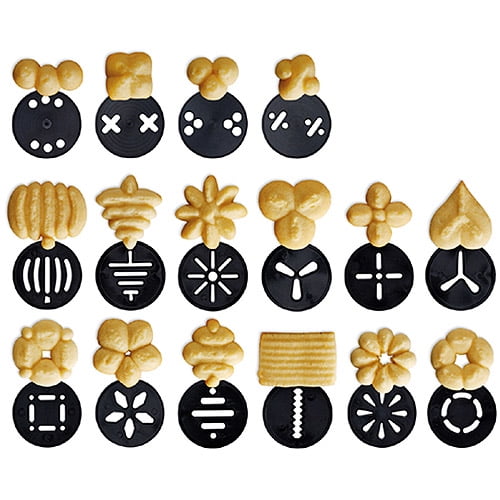
Cooky Press Thoughts—Disks

I misplaced my Wilton cooky press container, which showed the baked cooky shapes for each disk. The images for the following models look mostly similar.

Cooky Press Thoughts—Dispenser Trigger Squeezes

Using 1 1/2 trigger squeezes of the cooky press yields suitable size cookies.

For the cookies for "Scent o' mintal Journey, Part 4, Choco Unadorned/Coated Minty Cookies", I used two trigger squeezes per cooky. I think the heavier cooky made chocolatey dipping more awkward and used a lot more coating. The yield was fewer than I liked. I'll use 1 1/2 trigger squeezes when using a cooky press.

Monday, November 30, 2020

2020 Buckity October and November

I'd spotted loads of bucks in October and November this year. I'd created several short YouTube videos of them and included links to them in playlists "Eye-caught Snippets" and "Oh, deer!". In the last few days, I decided these October and November bucks warranted their own playlist.

As I'd run across so many bucks recently, I became curious enough to Google about bucks and antlers, particularly about growth spurts.

From "Antler Growth Cycle":

Antlers grow rapidly from their pedicle (base) while in velvet during the spring and summer, as fast as 3/4 inch/week for yearlings and 1 1/2 inches per week for adults during peak growth ... Growth rate slows dramatically during late summer while mineralization of the antler is completed.
From "Whitetail Deer Antler Growth Process"
over a course of 120 days from late March through early August, a mature buck can grow in excess of 200 inches of bone on his head

This site includes lot of pix showing antlers by time of year. The video link points to "Whitetail Deer Antler Growth Timeline". Note the looks for October and November.

"Time Lapse Antler Growth of Whitetail Deer - See How Fast Antlers Grow" is another visually informative video.

Thursday, November 26, 2020

2020 Halloween Meandering

This year of the pandemic, I hadn't thought I'd run across lots of Halloween decorations. I was surprised at numerous views that I collected from a few days before through a few days after Halloween, different parts of days.

Some houses didn't have decorations, some were similar to previous years. A few were noteworthy for having candy stations outside for safety of dwellers and trick or treaters. No need for some to approach and ring doorbells. One unusual item I snagged on Halloween day itself was a headdressed buck.

The video includes 42 stills and 15 video clips of 27 places I visited. Take a leisurely tour!


2022 Halloween Nearby Tour
Roving Around Halloween 2021
2020 Halloween Meandering

2019 Halloween, Pre-pandemic Year
Halloween Scenes Around (2018)
Related: April Fooling Easter Halloween and More (from 2018)

Enjoy YouTube Halloween themes playlists: "Baker's Dozen Halloween YouTube Links", "Halloween Music Baker's Dozen Matter"

Friday, October 30, 2020

Scent o' mintal Journey, Part 5, Choco Minty Sandwich Cookies

These cookies are actually Plan B use of remaining unadorned mint chocolate cookies from "Scent o' mintal Journey, Part 4, Choco Unadorned/Coated Minty Cookies". I had run out of melted chocolate after having coated only about one-third of my 40 cookies. It wasn't until the third day that I thought about gussying up uncoated ones. Hmmm, I didn't have spare frosting, but had ingredients for buttercream frosting.

My buttercream frosting recipe called for 3 cups of powdered sugar and typical additional ingredients. "Vanilla Buttercream Frosting". And rather than making pedestrian sandwich cookies, I added 7 drops of blue food coloring to the frosting. Why blue? Eh, I didn't notice that the cap was blue instead of green until I mixed up the frosting. Maybe weirdly, the color looks more mint green than baby blue.

I had only 19 unadorned cookies remaining. I dispensed 1 T frosting each for 10 cookies, mated them with 9 others. (I indulged and ate the single cookie with excess frosting. Yum!) Yield: 9 ~3" diameter sandwich cookies (each ~2 ounces, 255 calories), and one oddball (~ 190 calories)

Note: For future possible sandwich cookies from cake mix recipe that yields 40 cookies, an entire 16-ounce can of spreadable frosting might be enough for 20 sandwiches.

How did I decide the amount of frosting per cooky sandwich? From experimentation with these ~ 3" diameter unadorned cookies, I felt one tablespoon of frosting filled in well.

Musing: Oreo Mint Creme Chocolate Sandwich Cookies are similar to the cookies I made. Mine are bigger, and softer and easier to take small bites of.


Scent o' mintal Journey, Part 1, Sweetish Thoughts
Scent o' mintal Journey, Part 2, Nose 4 Mints N Chips
Scent o' mintal Journey, Part 3, Spearymintal Choco Chip Cookies
Scent o' mintal Journey, Part 4, Choco Unadorned/Coated Minty Cookies
Scent o' mintal Journey, Part 5, Choco Minty Sandwich Cookies