Showing posts with label astro topic. Show all posts

Sunday, August 31, 2025

Laptop Screen Too Bright During Night Sky Session?


If you do night sky observing or astrophotography, you learn that your eyes adapt to the night sky, but bright lights quickly thwart the vision. Using red lighting is suitable for seeing objects and retaining the night vision. Use a clear plexiglass sheet over a laptop screen to achieve a night-sky user friendly interface.

If using a laptop during a session at night, some software tools have night settings—changing white background to dark, and text to red. The user can vision-adapt to the night sky or continue to not have night vision disturbed. Other nearby astronomers can also be retain their night vision.

Our rather old and lower-end laptop has limited capabilities for night sky adaptations. The keys don't have red displays. The astronomy software tools are not commercially developed specialized packages, but open-source tweak-it-yourself tools.

Our Laptop Screen Fix—Red Overlaying

We picked the clear red plexiglass (details farther down, more elaboration in the YouTube video). The minimal fix would have been to order the best-dimensions pre-cut sheet and simply lay it over the screen.

With an eye for frugality, we trimmed excess height, saving a piece for possible future project(s). With consideration for secure fastening, then drilled small holes for shoelacing the larger piece to the laptop screen. View the video for guidelines on our overlay fix for the laptop screen.

Laptop Screen Overlay Candidates

Online, we researched getting a clear red overlay for placing in front of the laptop screen during astrophotography. Ideas for See-through red screening included the following:

  • Red cellophane that florists use
  • Acrylic sheets from Michael's and Hobby Lobby
  • Acetate (polypropylene) sheets at Michael's
  • Rubylith (photographic plastic)
  • Red tail-light tape
  • Clear red plexiglass

After consideration, most of the items have downsides, which I cover farther down the article. First, the winner!

Clear Red Plexiglass

The fix we chose was a clear red plexiglass from Canal Plastics Center in NY—"Red Transparent Acrylic Sheet" ($3.68 for 6" x 12" x 1/8" initial offering)

Also known as plexiglass, lucite, or perspex, acrylic is a popular and versatile plastic for many applications. It is a common substitute for glass as it is crystal clear, lighter, more shatter resistant and easy to work with. Acrylic sheets can be laser cut or saw cut, as well as machined with routers, drills and sanders.

The webpage provides good pricing info for the multiple precut dimensions and thicknesses. (We picked 12 x 18 for laptop fit.) Other interactive webpage options included custom dimensions, holes, edge finishings, and shipping priorities.

A Close Candidate Red Plastic, But No Cigar

"Lesnlok Red Acrylic Sheets - 1/8" Thick, ..."

Translucent red plexiglass red acrylic,with 2 pieces of red acrylic sheet,This acrylic resin has excellent optical stability and uniform thickness.

The term translucent nudged us away, along with two negative reviews that indicated shortcomings of using the product.

The No-go Reds

The other red transparent items under consideration were food for thought, but didn't seem suitable enough.

 Red Cellophane Wrap, Used By Florists

It took some doing to find out what the item was called. Wound up with reasonable finds when googling "Cellophane wrapping paper for floral arrangements" and "floral arrangement red transparent wrapping mylar sheets". AI showed reasonable info for the product—"red transparent wrapping mylar sheets, often called red cellophane wrap"

An Amazon find further helped with info—"Vanhench Red Cellophane Wrapping Paper, ...". Color and transparency were winning points, however, the product looked too flimsy and scrunchy.

 Acrylic Sheets from Michael's and Hobby Lobby, Acetate (polypropylene) Sheets at Michael's

These products are bundled with additional color sheets and tend to be smaller than laptop screen sizes. It didn't look feasible to buy package deals to obtain a onesie-twosie (red) item.

 Rubylith, Used in Photography Masking

In the distant past, I used rubylith for printed circuit board artwork layout, particularly analog circuitry. Technology has long made manual layout obsolete; however, photographers and artists still buy the product.

Snippet description from "Rubylith"
Rubylith consists of two films sandwiched together. The bottom layer is a clear polyester backing sheet; the top layer is a translucent, red (ruby) coloured sheet. The top layer can be cut and peeled away from the bottom layer.

Idea discarded—

  • Color translucency reduces clarity and readability of screen info.
  • Colored sheet could be easily damaged, letting light bleed through and reducing effectiveness for user.

 Red taillight Lens Repair Tape

The tape comes in about 2" width rolls. We considered taping a small piece onto a scrap piece of 7 mil clear mylar to test transparency. Even if the small sample looked OK, idea of pulling and taping SEVERAL aligned rows was not appealing. Also, transparency might less than optimal because of tape's intended use on taillights.

Advisory Webpages for Buying, Cutting, and Drilling Plexiglass

  1. Canal Plastic Center "Red Transparent Acrylic Sheet" (pre-cut 12" x 18" x 1/8" sheet)
  2. "Cut Plexiglass, Acrylic, Plastics with Draw Knife Scoring - Cheap, Fast", 1:49
    My gist: Draw knife, thin plexiglass, main points-draw knife several times on firmly held-down plexiglass (using metal straight edge), then snap.
  3. "How to easily drill plexiglass, lexan and acrylic sheets", 3:10
    My gist: Clamp plexiglass to scrap board, then use step drill or twist drill with tape protection and lubricant. Additional drilling considerations--slowness, light pressure.
  4. "Simple Solutions: Tips for Drilling Through Plexiglass", 0:44
    My gist: Sandwich plexiglass between two layers of quarter-inch plywood ... mark the holes ... line plexiglass with plywood ... drill right through all three layers.

Related: Keyed-in text and image of PLASKOLITE Plastic Cutter for cutting plexiglass.


Want additional astronomy-themed articles? Click for "astro topic" search results in my blog.

Thursday, August 7, 2025

Planisphere, Star Atlas, Stellarium, Oh, My Stars!

Starting out viewing the night sky? This article briefly describes three items recommended for beginner astronomers (recent astronomy club presentation Navigating the Night Sky). Resources for more info follow.

  • Planisphere—a handheld flat, circular item for identifying stars and constellations that are visible in the night sky for specific time and date
  • Star atlas (aka sky atlas)—a map of the night sky, to locate and identify celestial objects. Can be in book or chart form that maps the positions of stars, constellations, and other celestial objects in the night sky.
  • Stellarium—free open-source planetarium software that provides 3D simulation of the night sky

Planisphere, Star/Sky Atlas

This section covers both planispheres and star/sky atlas' because of interrelatedness in Google results.

YouTube video— "How to use a Planisphere" (9:09), latitude version shown—40° to 50°

From video description:

Step by step instructions on using a planisphere for locating objects in the night sky. This is a useful tool in astronomy for locating constellations and other notable features.

Where to buy? Amazon browsing for "planisphere" shows various planispheres and some sky atlas'.

Noteworthy—above webpage includes a link to "Starfinder: The Complete Beginner's Guide to Exploring the Night Sky Hardcover – October 21, 2013" ($25),

Now with removable planisphere!

Where to buy star atlas or sky atlas?
Amazon results for "star atlas"
Amazon results for "sky atlas" (more varieties of offerings)

Prices: From under $10 to astronomical

Stellarium

Stellarium is free software for Windows, Mac, or Linux. Download from main page https://stellarium.org

Stellarium is a free open source planetarium for your computer. It shows a realistic sky in 3D, just like what you see with the naked eye, binoculars or a telescope.

Note the system requirements to ensure if you can install on your device.

Read features section to discover sky items to see, when you can see them, and various other info. (Before you look for sky objects, you must set the tool for where you are and the date/time.)

Additional Resources

Visit Cloudy Nights Forum, "Beginner Star Gazing: Planisphere, Star Atlas, or Sky Maps?" for comment and recommendations.

"Want to learn how to stargaze? Here's how to get started in 12 easy steps" provides helpful titled subtopic sections, such as
  • Read beginners' books and online resources
  • Choose your stargazing site
  • Let your eyes adapt to darkness
  • Take time to observe individual stars
  • Spot the planets with your naked eye
  • See how the stars move across the sky
  • Get kids and family involved
  • Learn the constellations and asterisms (informal but recognizable star patterns, which can be part of one or more constellations)

Related: "Constellations and asterisms: what's the difference?"

"How to Stargaze" includes handy titled sections as follows:

Stargazing for Beginners
 Start by Looking Up
 Locate the Big Dipper
  Locate Other Bright Star Patterns
Helpful Stargazing Tools
 Star Charts or Stargazing Apps
 Grab Binoculars
 Borrow a Telescope

Note: If you join Austin Astronomical Society (AAS), you can borrow a telescope. (Membership levels are at "To Join AAS".)

From "Become A Member"

Loaner Scope Program

8″ Dobsonian telescopes with very good eyepieces and all the needed accessories to have a good visual observing experience or to test your next scope upgrade!

Want additional astronomy-themed articles? Click for "astro topic" search results in my blog. Related: Sky/Astronomy Items YouTube playlist

Thursday, May 29, 2025

Sky Objects, Mostly Moon Shots


The pix in my YouTube collection are from having used mostly two point-and-shoot cameras. Incidentally, smart-phone cameras also have capabilities for taking similar sky pix.

For people who haven't considered photographing sky objects, look, up in the sky. It could be Supermoon! Build your own pic collection for day or night moons! Also, pick other sky objects that catch your fancy.

I recently perused my cloud account for pix I've uploaded there within maybe 10 years. One folder that caught my eye—"NearSkyObjects-Canon PowerShot ELPH 190 IS". It consisted of eight images from 2020 and six in 2021. I poked through my computer listings, seeing additional sky images I could include in my slide show.

Most images are of the moon—day, night, various phases. Several are in plant views. The final item is my time-lapse slide show of May 16 2022 lunar eclipse. Final tally of my sky objects for this blog topic is 23. (The count does not include YT videos from 2023 and 2024.)

Want additional astronomy-themed articles? Click for "astro topic" search results in my blog. Related: Sky/Astronomy Items YouTube playlist

Related: 4-sky-objects video—
Sky Objects, Mostly Moon Shots (Minute Teaser)"

Friday, February 28, 2025

Astro Imaging Session Piques Three-item Topic

What arose when the sun set down at the dark site we went to? Dark skies and objects (constellations, star clusters, nebulae, ...) that don't show up well in light-pollution, densely populated areas. What three items am I talking about? A TV tray table, a transparent cookbook stand, and a thin, portable gaming monitor.

In the Beginning (of the Astrophotography Session)

We met with another astronomy photographer (AKA astrophotographer) at a dark site, both parties for a nebula 1000 light years away. Our friend stayed long enough to also photograph a set of galaxies 60 million light years away. BTW, astrophotography is not merely taking one pic and seeing loads of details. Each session for each target tends to take hours, sometimes multiple sessions, specialized equipment for taking out-of-the-world pix, and cooperative climate conditions.

Portable Gaming Monitor

Our friend showed a new acquisition for showing audience members at outreach events—a portable gaming monitor that he read about in a NYT Wirecutter article, maybe "The Best Monitors". Arzopa seems eye-poppingly low cost, compared to other reviewed monitors. "Arzopa Z1FC 144Hz Portable Gaming Monitor Review" lists the measurements as 8.2 by 14.9 by 0.5 inches, weighing 1.7 pounds. (The traditional dimension reference is 16.1 (corner to corner).

Table Slots Between Slats a Hindrance to Stable Monitor Support

Anyway, he is understandably concerned about the monitor's thin foldable corner support falling through slots on his display table (square with narrow gaps between slats). Noting the monitor's thinness, I mentioned having a plastic, transparent cookbook stand that would probably work with such a monitor.

Another idea was trying a different table. I thought of our foldable TV tray table that measures 14.5 x 19 and has no gap hazards. BTW, Google images search shows good results for "acrylic cookbook stands" and "foldable TV trays". BTW, a quick, low-effort, low-cost solution to preventing monitor support fall-through, using a square piece of cardboard the same size as the square table would help.

Music Stand as Monitor Support? Nah!

An idea for stable displaying of the monitor briefly arose—using a music stand. It has variable height and tilt adjustments and horizontal lip. Downsides, however, are heaviness from metal weight and feet that take up space during transport. Furthermore, securing a monitor to avoid tipping or toppling it is concerning.

Musing Monitor Support Using No-slat TV Tray Table and Cookbook Stand

The next day, I thought about taking pix showing my cookbook stand and TV tray table. I took a set of pix—one of the stand (with open book) atop the table, one with additional items, and several showing different-angle views.

It occurred to me that I had the makings of a blog topic that included some idea exchanges about items not specific to astronomy. Also, I got to thinking of how to organize and create a helpful slide-show video.

Besides Monitor Musings

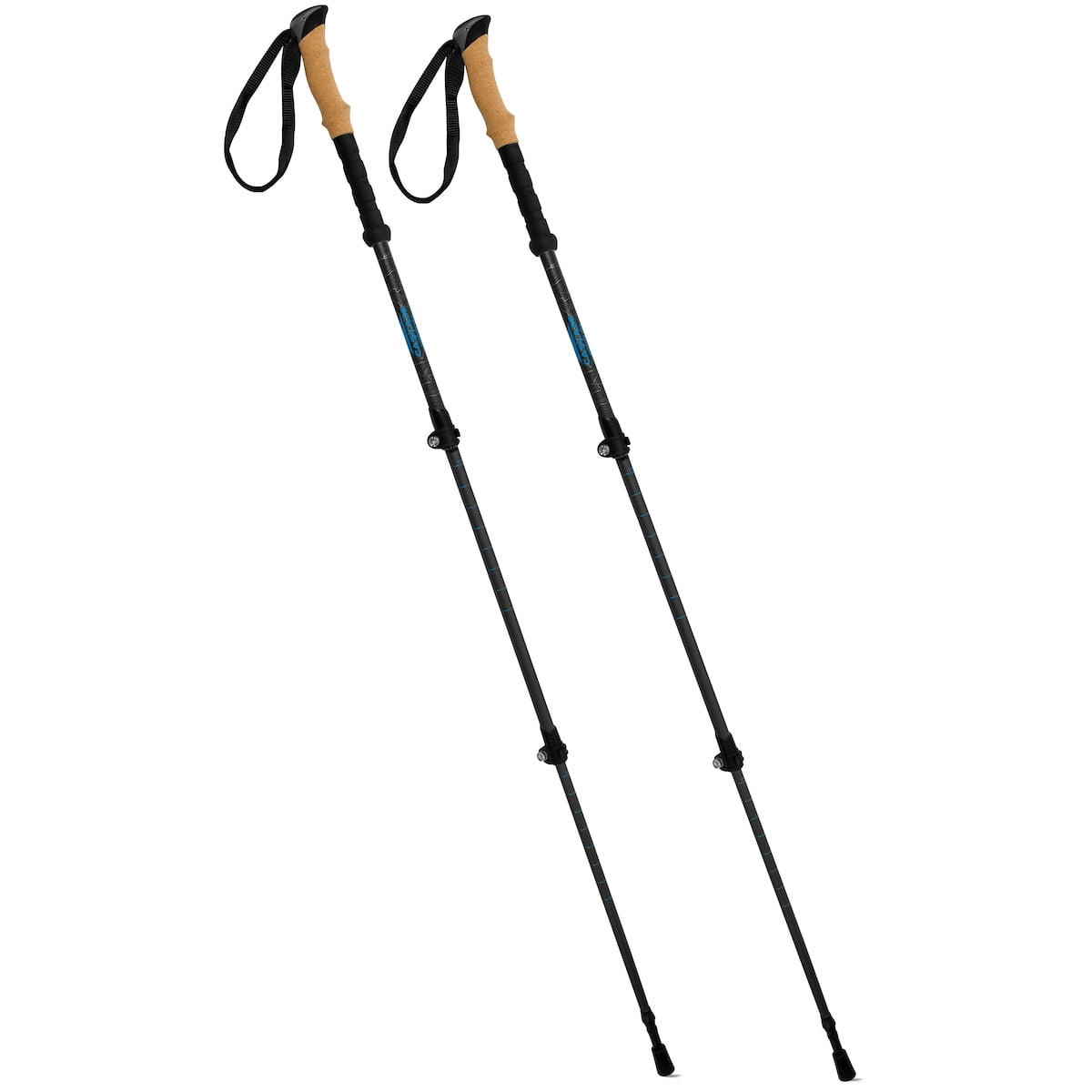
Some additional items in the video are are a yardstick and a set of trekking poles. The yardstick provides dimensional references. The sticks were mentioned during the imaging session. FWIW, a dark site can be challenging for those unfamiliar with the terrain. Even more challenging is navigating after the sun goes down. Better to have sticks and not need them than need them and not have them.

Update: Additional Info After Video's Upload on Feb 28 2025

After publishing the blog article and uploading the movie, our friend sent an image of his table and portable gaming monitor with the monitor's support leg. His fix for possible leg fall-through was a bottle cap.

A bottle cap does the job for the leg and the display is too thick to slide through. The [table's] gap actually cradles the bottom of the display! ... I added a couple of bits of foam insulation to the bottle cap to keep the leg centered in it.

The video's thumbmail shows the initial suggestion, the friend's pic, and additional ideas. The newer items include bungee cords for better securing a monitor for display and avoiding pit falls.


View use of slotted aluminum folding table and bottle cap.

Want additional astronomy-themed articles? Click for "astro topic" search results in my blog. Related: Sky/Astronomy Items YouTube playlist

Tuesday, April 30, 2024

April 8 2024 Total Solar Eclipse (44-sec capture)

Why only 44 seconds instead of reported totality of 2 minutes and 35 seconds? Clouds interfered with and distorted the capture, eventually totally obscuring the corona after ~43 seconds. My entire recording was 2 minutes and 26 seconds, but the viewfinder showed only darkness from about 44 seconds till the end. The video shows real-time speed (~44 seconds), then half speed.

Eclipse Day Decisions Made For Better or Worse

I couldn't order the weather. It was fickle for a good amount of Texas, including my viewing site, Austin. Weather forecasts and updates seemed to constantly change. Inclinations to travel were tempered by fears of encountering vehicular multiple-dimpling and hail-caused car window smashings. Also, destinations required real time to reach; available time required for traveling eventually evaporated. We stayed put.

From hearing stories about past eclipse events. area population swelling and travel would be challenging for residents and visitors alike. Highways and smaller roads could result in no-gos from traffic overflow or collisions or combinations. News frequently broadcast alerts about having certified solar glasses, stocking up on food, ensuring full gas tanks, and preparing for hours-long departures afterwards. We took the advisories seriously.

I should have thought of using a tripod for my Canon IXUS 180 (PowerShot) camera. As much as I tried to hold it steady, it shook. After I truncated the recording from 2 minutes and 26 seconds, I manually aligned the frames using GIMP. The process was similar to how I aligned the October 2023 annular eclipse frames.

Article:"Partial Annular Solar Eclipse Oct 14 2023, Austin"
YT video ~35 sec): Side by Side Eclipse Views, Austin Area Oct 14 2023"

Another should-have-done was aiming the camera downward a few seconds before totality, turning it on and starting to record, then aiming the camera upward. I would have captured the timer beeper for start of totality. (I did manage to capture the timer's end-of-totality beep.)

GIMP and OpenShot Image Processing

In short, I used GIMP, with grid display to align the images in layer views. The task was much more difficult than October 2023 annular eclipse because of moving-clouds distortions and obscuring. Several times, the view transitioned from disk to arc to smudge, in different directions and varying focus qualities. Clouds! Consolation is that some of the corona was viewable, and we got no rain.

As for OpenShot, I had help with converting the clip to individual frames, then re-assemblling the edited frames into a view-stable disk-centric movie. Turns out that trying to use OpenShot to assemble the frames froze the tool. We used ffmpeg in a command window.

Extra Touches

Some features I hadn't tried ever, or in a long time:

  • I used some OpenShot's capabilitiese to crop, scale down, and move an inset movie of a kitchen timer.
  • I extracted about 50 seconds of audio in OpenShot, then opened and edited it in Audacity. I added it to the video, along with the image of the graph.
  • I created an outline circle to note the major visible prominence at 4 o'clock position.

If I Knew Then, ...

I discovered many of my actions generated a lot of heat before light. Glad to have learned shorter steps eventually. A thought kept me going for creating the video. I'd never think about processing another eclipse set of images. Not inclined to go to another eclipse site any time soon.

"Can’t get enough of the total solar eclipse or got clouded out? Here are the next ones to watch for" provides some years to consider next US eclipses.

The next U.S. taste of totality comes in 2033 when an eclipse brushes Alaska and Russia. And in 2044, one will cross Greenland and western Canada, touching swaths of North Dakota and Montana. ... An eclipse on the scale of Monday’s event won’t happen again until Aug. 12, 2045.

"Future Eclipses" provides some info in tables for future solar and lunar eclipses. Long haul to get there.


Want additional astronomy-themed articles? Click for "astro topic" search results in my blog. Related: Sky/Astronomy Items YouTube playlist

Saturday, December 30, 2023

GIMP-adding Newest Saturn to 3-Saturn .xcf File

My previous topic, "2-Saturn Composite, Anticipating Future Edge-on Rings" inspiration came from my curiosity about Saturn's upcoming rings edge view, anticipated in March 2025. Because of Saturn's position behind the sun at that time, however, we won't be able to view or capture images of it then.

That article includes basic Saturn info and resources. The video "2-Saturn Composite Image, GIMP Revisit" shows numbered steps for creating the composite comparing Saturn images taken 9/2/2021 and 11/22/2023.

This time around, the topic is about having found a GIMP-editable (.xcf) 3-Saturn composite with images from 2015 and 2018 as well as 2021, then adding the image from November. The video shows the steps in using GIMP for the process. Main GIMP tools for setups and usage are layers, measurement, grid, move, and draw. Saving and exporting are must-do's for successful outcome.

Want additional astronomy-themed articles? Click for "astro topic" search results in my blog. Related: Sky/Astronomy Items YouTube playlist

Thursday, November 30, 2023

2-Saturn Composite, Anticipating Future Edge-on Rings

We recently pic'd Saturn, then recalled another imaging session (from about 26 months before. I wanted to compare images, then create a composite. The 2-Saturn composite image shows Saturn on 9/2/2021 and 11/22/2023. The orientations differ, and the newer Saturn's set of rings angle narrower than the rings of the earlier Saturn. During the image creation process, I had became curious about when Saturn's rings might "flatten", maybe disappear from view.

I thought about the steps I used in my process. Having used GIMP recently, and PaintShopPro earlier, I decided to make a slide show of the steps.


Some Saturn Resources

To acquaint myself with my orb target, I ran across a few basic resources. NASA's "Saturn: Facts" provides good overview. EarthHOW's "7 Planet Saturn Facts: Beyond its Signature Rings [Infographic]" includes more details and tantalizing images, especially the infograph. "How long does it take Saturn to orbit the Sun?" states "approximately 29.46 Earth years, or 10,755.7 Earth days, to complete one orbit around the Sun". This site provides a nice list of q/a's. Saturn has an unusual feature besides its rings: NASA's "Saturn’s Strange Hexagon" explains "a bizarre six-sided hexagon feature encircling the entire north pole".

"Saturn’s Rings Will Temporarily Disappear From View in 2025" (published November 13, 2023) explained the rings' next "disappearing act".

In 2025, Saturn’s rings will be invisible from Earth for several months. ... Saturn’s rings are so thin that they seemingly vanish when viewed edge-on. And as Earth and Saturn travel around the sun on their respective orbital paths, our planet reaches this particular vantage point like clockwork, roughly every 13 to 16 years. ... the rings will disappear from sight in March 2025.

The following image represents three Saturn images, the existing duo, and a phantom representation for March 2025. The last image indicates planet tilt and edge-on rings. FWIW, Saturn is not in the night sky around that time frame, and the sun's angular alignment to Saturn WRT Earth's position endangers eyesight.

Want additional astronomy-themed articles? Click for "astro topic" search results in my blog. Related: Sky/Astronomy Items YouTube playlist

Monday, October 30, 2023

Partial Annular Solar Eclipse Oct 14 2023, Austin


Our area (Austin) was fortunate enough to behold a partial solar eclipse, clear skies and all. Texans in San Antonio, about 100 miles to the south, got a fabulous annular eclipse because of that area being in the zone of annularity.

My video combines two views of the same image frames used. One portion shows the sun aligned, and the other portion shows the sun drifting south a little as the mount was not perfectly polar aligned. I used tweaked versions (stationary sun, sun/moon movement) to build the side-by-side version.

The actual eclipse lasted over three hours. The resulting videos were each about 36 seconds. Over 900 frames made up each video segment. It was a learning process to prep and compile. Methodology for aligning the sun images using GIMP, my graphics editor, evolved over a few days. I used grids, circumscribed squares, circles, squares and circles, disk shapes.

I aligned using edges, then picking different edges as the moon advanced along its route.

Eclipse Resources

"What Is a Solar Eclipse?" and What Is an Annular Eclipse?" illustrate and simply explain solar and annular eclipses:

For an overview of the two main types of solar eclipses, Schreiner University's Eclipse Path site provides overall info about solar eclipse paths for October 14 2023 and April 8 2024. The NASA composite and Schreiner's video simulations for the two featured eclipses are view worthy. Nice to also see a short section about eclipse viewing safety.

"Types of Solar Eclipses" succinctly contrasts the three kinds of solar eclipses:

A total solar eclipse happens when the Moon passes between the Sun and Earth, completely blocking the face of the Sun. People located in the center of the Moon’s shadow ...

An annular solar eclipse happens when the Moon passes between the Sun and Earth, but when it is at or near its farthest point from Earth. Because the Moon is farther away from Earth, ...

A partial solar eclipse happens when the Moon passes between the Sun and Earth but the Sun, Moon, and Earth are not perfectly lined up. Only a part of the Sun will appear to be covered, giving it a crescent shape.

Reaching Back to the August 21 2017 Solar Eclipse

"Eclipse Map — August 21, 2017 Total Solar Eclipse" shows the path of totality as far away from our area, thus, why our eclipse image showed a crescent-moonish sun.

Want additional astronomy-themed articles? Click for "astro topic" search results in my blog. Related: Sky/Astronomy Items YouTube playlist

Friday, July 30, 2021

June and July 2021 Full Moons, Strawberry and Buck

Did you wonder about recent hoopla about names for full moons? My topic emphasis is on Strawberry (June) and Buck (July) for this year.

"[Moonname] Moon: What is it and why does the Moon have different names?" initially explains the current or upcoming full moon. It also provides names and explanations for the rest of a year's full moons, including "blue moon":

Native American tribes named it this [Strawberry Moon] because they would harvest strawberries during this time. ... But this month it will also be a supermoon - that's when the full moon looks bigger and brighter in the sky than normal because it's closest to the Earth in its orbit than most other times.

Note the July full moon (Buck) shows a Getty pic of a nice pair of bucks in front of the moon. More on the buck moon farther down.

Moon Shots

I took images for the full moons for June and July this year. June 22 was a dry run for multiple-pic taking, not many good ones showing features. June 24 was a better yield, despite threatening clouds playing hide-and-seek. July 23 was a total bust because I neglected to review my camera settings and wound up with overexposed moon shots that I couldn't post-process to obtain features. July 24 yielded good results, but unexpectedly boring--nearly all identical shots!

Strawberry Tie-ins for Strawberry Moon Shots

Strawberries, yum! I had seldom bought any for over a year. But they've re-appealed for the last couple of months. I cut the tops, rinse them off, cut the bottoms into one bowl, and cut the rest into rings and semi-rings into another bowl. I sprinkle sugar into the first bowl, cover it, and let the berries juice up overnight for cereal the next day. The other bowl (covered) of berries keep in the fridge for well over a week because of lack of fluid and sugar.

Strawberry is one of the main flavors of neapolitan ice cream, the others being vanilla and chocolate. Neapolitan helps an ice cream eater avoid having to commit to only one or two flavors when buying a carton.

Neapolitany Cakes

The strawberry full moon, which occurred June 24, was fresh on my mind when I decided to make a cake June 25. Maybe subconsciousness for neapolitan-theme cake nudged me toward ensuring strawberry on the brain. Sometime during consumption of the three-flavor cake, I decided to try a different flavor-arrangement version.

Cake #1—yellow and strawberry cake (nowhere as zebra-stripey as originally intended), chocolate frosting

The strawberry batter includes 1 package of strawberry Flavor-Aid, which might have thickened the batter that I made with 1/2 of the yellow cake batter.

Cake #2—yellow and chocolate cake (nowhere as marbly looking as originally intended), strawberry frosting

From looking at some YouTube videos, it looks like marbling is better for alternating batter splotches in a couple of passes, then dragging a knife or spatula in wide swaths. I had poured yellow batter onto two pans, then splotched chocolate batter, then dragged the spatula. Result wasn't much marbling.

Neapolitan Ice Cream

What's special about neapolitan ice cream? When did they first make it? How do the layers come together?

"Learn About the Origin of Neapolitan Ice Cream" describes the confection and its origin:

Neapolitan ice cream – also called Harlequin ice cream – is composed of three flavors. They are chocolate, vanilla, and strawberry that are arranged side by side without packaging in between them. ... It derives its flavor colors from the Italian flag. Green (almond or pistachio), Red (cherry or pink), and White (vanilla).

"How do they get the three flavours of Neapolitan ice cream into the box" provides further explanation of the factory process:

Three ice cream flavour tanks, holding about 10,000 litres, are filled with chocolate, strawberry or vanilla ice cream. ... Pipes from each tank meet in a large rectangular nozzle, which is the same shape and size as the short side of the old-fashioned, two-litre, cardboard ice cream container.

The nozzle has two dividers, thus separating the three flavours of ice cream. ... It drops down to the bottom of the box and fills it with the three bands, before moving on to the next box . ... The boxes then go into a freezer where the ice cream hardens for about eight hours

Buck Moon Shots

As mentioned previously, my slide show for the buck moon was boring—all 39 frames looked nearly identical. Sooo, a nice image with enlargement is in my video.

Buck Tie-ins for Buck Moon Shots

I was fortunate enough to record several snippets of deer with a buck in the herds on adjacent days around the buck full moon. I also included some additional buck cameo images. How can that be? View and find out!

Want additional astronomy-themed articles? Click for "astro topic" search results in my blog. Related: Sky/Astronomy Items YouTube playlist

Tuesday, April 30, 2019

DIY Red-light Head Light


You might ask, "Who would want a red-light head light?" Well, amateur astronomers, for hands-free seeing at night, especially if they're carrying or handling equipment, such as telescopes. Other night-sky observers might want to wear them for being able to walk around without bumping into people or items, and they can retain night vision while viewing objects, whether through telescopes or binoculars at night-sky watching events.

You might wonder why it's important to use red light at night to see with instead of using other-color light. Red light helps illuminate dark areas without adversely affecting night vision. Eyes need time to adjust to dark surroundings. At night, when someone turns on a non-red light, such as car headlights or white-light flashlight, sky objects become less visible and vibrant until the eyesight becomes re-accustomed to darkness.

A red light head light is a modification of an off-the-shelf elastic headband lamp. (More on acquiring the lamp and similar later.) The bulb itself is white—suitable for normal uses. For astronomy purposes, the light needs to be red.

Step-by-step Modifying Regular Headlight to Red Headlight

The video shows items needed, procedure, and white lightcircle next to red light circle. Items required:
  • Head lamp (Western Safety brand) or similar elastic-band lamp with center bulb
  • Red automotive tail light tape, available at auto parts stores
  • Scissors
Note: The tape should be wider than the diameter of the lamp's screw-on transparent cap. For example, the tape I used was 1 7/8" wide, and the cap was 1 5/8" across. (Ruler in video is for tape width reference.)

Procedure
  1. Unscrew the retainer ring with clear cap from the rest of the lamp.
  2. Separate the clear cap from the ring.
  3. Cut a squarish piece of red tape that overlaps the cap with a reasonable margin all around. In my case, the tape was wider than the cap diameter by only 1/4".
  4. Firmly place the center of the flat part of the cap onto the sticky part of the tape.
  5. With scissors, snip the red tape's corners and sides up to the cap's edge.
  6. Fold and evenly press each of the snipped tape corners to the cap's edge, pressing at opposite corners for evenness in stickiness and surfaces.
  7. Press the retainer ring back onto the cap.
  8. Screw the retainer ring and cap onto the lamp.
For contrast, the video shows red and white flashlight circles side by side.

Getting an Elastic-band Headlight

Western Safety manufactures a headlamp commonly available at Amazon and Harbor Freight. Amazon's price is $1.79, and Harbor Freight's list price is $2.99. For additional types of headlamps, visit Google image offerings.

Some Caveats of the Western Safety Headlamp

You might run into at least one of the following situations if you get headlamps that this company manufactures. The first two items have workarounds.
  • Slots for straps might be wide; straps might loosen from the unit. (Tape the strap pegs together.)

    Related: Contrast two styles of strap retainers and slots.

  • Straps might be short (tight fit) for the wearer. (Stitch an extender, such as a piece of a lanyard or wide ribbon.)

  • Switch sometimes doesn't turn on reliably.
  • Battery cavity can be slightly undersized and batteries not fitting well.

Want additional astronomy-themed articles? Click for "astro topic" search results in my blog. Related: Sky/Astronomy Items YouTube playlist