Showing posts with label vowels. Show all posts

Thursday, September 30, 2021

Auther, Authur, Author, Other

eth, thorn, etc.
Two misspellings, then correct spelling ("author") led me to think of "other". Although directly unrelated to auther/authur/author, "other" letters spell like they could have been pronounced with a short "o" and unvoiced "th". It also seems illogical that the "o" is pronounced as a short "u". These thoughts nudged me to write about some language items, such as some older English-language letters, consonant pairs, silent letters, vowels, and the schwa.

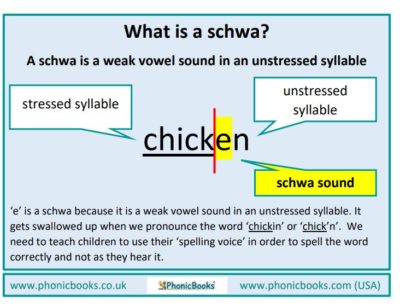
I'm usually an excellent speller. Recently, however, I caught myself having spelled auther, then authur, then author. (Finally, correct spelling!) I thought about the letters I used in those words. "Au", in author's case, is pronounced with a short "o" sound. The "th" in author is unvoiced. The last vowel in author is 'schwa'ed". Thus, the unaccented syllable has a vowel that sounds all the same to me--a bridge between the consonant pair and the "r". The schwa is a catch-all vowel sub that's barely there, imho.

Consider the following sounds and characters for "other":

  • The "o" is actually pronounced with a short "u" sound rather than a short "o" sound.
  • The "th" sound is voiced.
  • The last syllable's vowel has that multipurpose schwa sound.

Phonetically, "author" might be pronounced "other" if you were somewhat familiar with English. For the three items I've mentioned, I'll discuss the "th" pronunciation first and vowels later.

th combination, eth and thorn

Correct Pronunciation of "th" combination would seem mystifying to non-native English speakers. "We used to have six more letters in the English alphabet" and "The five lost letters of the English language" provide background on use of "th" as the voiced "eth" (example, "then") and the unvoiced "thorn" (example, "thin"). If "th" were replaced by eth (Ð, ð) or thorn (Þ, þ) symbols, pronunciation would be more obvious. (I'd be in favor!)

additional past letters of interest WRT English alphabet, ash, ethel, wynn, yogh, ...

Both aforementioned resources describe "ash" and "ethel", which actually might look familiar in "separated" images. The "ash" separates to "ae", The "ethel" separates to "oe". The "wynn", another character in both resources, resembles a "p", but is actually associated with "w". The quartz.com resource mentions the "yogh", which resembles the number "3". The description explains "gh" combinations, which I'd often wondered about.

Yogh was historically used to denote throaty sounds like those in Bach or the Scottish loch. As English evolved, yogh was quickly abandoned in favor of the gh combo. Today, the sound is fairly rare. Most often, the gh substitute is completely silent, as in though or daughter.

How about a bigger gulp of past letters in the English alphabet? "10 Letters We Dropped From The Alphabet" displays and describes the following letters: "long s", "ampersand", "thorn", "that", "eth", "ash", "ethel", "wynn", "yogh", and "eng". The video owner makes a good case for leaving the "long s" dead. Actually, the "ampersand" sneaks into areas when character count counts. Some other letters might look logical to bring back. The "eng" could shave off a letter for every gerund and present participle.

vowels

Elementary schooling teaches about a, e, i, o, and u. They teach long vowels and short vowels. Later, they insert words with two vowels side by side, pairs such as "ea", "ee", "ie" ("i before e except after c"), "oo" (weird inconsistent pronunciation, such as "hook" and "loot"). They introduce cues like "magic e" that changes a short-vowel word into with a long-vowel word. It's much later to discover numerous exceptions to rules.

I am puzzled about "o" in "other" being pronounced as a short "u" sound. Think "other" vs. "otter" or "bother". Additional short-u sounding words with "o"—mother, brother.

"Oo" and "ou" can be confusing for pronunciations. Some words with "oo" are pronounced with pursed lips, some as short u's. "Root" seems to have both pronunciations. As for "ou", some pairs combine to sound like "ow". However, various Google search results indicate Canadians pronounce "ou" in "out" and "about" as "oot" and "aboot". "Route" is pronounced "rowt" and pursed-lips "root"—seemingly correct either way (stateside, anyway).

schwa

It looks like a schwa is considered to be a sound, not a letter. I think it should be added to the English alphabet. It resembles an rotated "e". From Merriam-Webster:

an unstressed mid-central vowel (such as the usual sound of the first and last vowels of the English word America)

I'd favor using the schwa to replace all of i's, e's, o's, and u's that currently serve as "unstressed mid-central" vowels. Think of my example of auther, authur, author. Comparative word, such as "better", and a phonetic neighbors "batter" and "bitter" would be fine with a schwa instead of "e" in the last syllable. While I'm at it, I'd spell "neighbor" with a schwa instead of "o".

meandering to consonant combos

I've noticed for many years of three ways of pronouncing "ch". Maybe I've run across so many "ch" words that the correct pronunciation isn't mysterious to me. From "The 3 'ch' sounds: sh, tch, k":

It can sound like k (as in “chasm” or “school”), like sh (as in “charade” or “brochure”), and like tch (as in “champion” and “child”).

One consonant pair that has intrigued me for pronunciation is "tr", as in "tree". I hear "tchree". I sense that someone who pronounces it as "tree" (tongue pressing the backs of the two upper front teeth) would sound like a non-native speaker of English, maybe Eastern European. Related: pronunciation of "dr". Example: "Dream" sounds like "jreem" to me. "Dreem" (tongue pressing near the front of the roof of the mouth) would also maybe sound Eastern European.

Various consonant pairs seem to have one unpronounced letter. "HHow to Pronounce LM in FILM, REALM, PALM, OVERWHELM - American English Pronunciation Lesson" explains that the "l" is actually pronounced. The video also makes a good point about not inserting a vowel between "l" and "m". I tend to skip the "l" when saying balm, calm, palm, but I voice the "l" when saying realm.

"How do you pronounce “kn” in English?" explains the "k" was not always silent.

In early english, the "k" in the "kn" combination WAS pronounced, up until about the 15th century.

"Does German Use Silent Letters?" explains that the "k" in "kn" combination is voiced in German.

In English, the K is silent, like in the word KNEE. In German, both the K and the N are pronounced, and the K is hard.

The website also notes that the "ps" combination:

In English, the P is silent, like in the English word PSYCHOLOGICAL. In German, both the P and the S are pronounced, so the word begins with a ‘psss’ sound.

Additional consonant pairs I've noticed as odd, mostly because of non-pronunciation of one of the letters: mn (as in mnemonic), ph (as in phoenix), pn (as in pneumonia), and pt (as in pteradactyl). The "ph" pronunciation seems consistently "f".

Speaking of letters seen and mostly not heard, Merriam-Webster has a webpage listing and describing silent letters (from A to Z). Visit "Every Letter Is Silent, Sometimes How every letter can be (annoyingly) silent".

I hope I've piqued some curiosities about English-language characters present and past, and also about some pronunciations.


Related: "Pronunciation Musements"

Thursday, March 24, 2011

Spoken Out

Pronunciations interest me for how words and names often sound different than their spellings. Even as a native English speaker, I trip up. I've started this article talking about EU (not you) and skipped along names, consonants, words, and contextual pronunciations.

EU
In a TV show about Paris, the narrator pronounced unique as YOO-nik, like the word spelled eunuch. Phonetically related is the name Eunice, a name I heard of at a young age. I heard it as yoo-nis, but thought it would be spelled Unis. If I’d never known the pronunciation of Eunice, I might have thought the name should sound like ee-YOO-nise (long i) or EU-nise.

More observations about name pronunciations
  • Basil—if if’s a name, pronounced BAAA-zul. If it’s a spice, pronounced BAY-zul.
  • Herb—it it’s a name, pronounced herb. If it’s a spice item, pronounced urb.
  • Lincoln (LINK-un) and palm (pom) spell with l’s, but don’t sound with them.
  • Bret Favre (farv)
  • Bode Miller (BOH-dee)
  • Bono—BOH-noh if you're talking Sonny, Cher, or Chaz. BAH-noh if you're talking about the Irish singer.
  • Gabriel vs. Gabrielle. The guy's name has a long a, and the woman's name gets a short a. I would think it should sound like gay-bri-ELLE.
  • Paul Krugman (long u or short u?), John Boehner (pronounced bay-ner), Matt Groening (pronounced grayn-ing)
More OE pronunciation
Three names with "oe" vowel combinations can seem unpredictable and confusing besides the ones I just mentioned. Why is Joe pronounced joh, but Zoe is ZOH-ee and Chloe is KLOH-ee For that matter, if I hadn’t heard of Chloe, pronunciations could include chloh, shloh, SHLOH-ee, CHLOH-ee, kloh. Hmmm, Joe needs a y for the pronunciation of JOH-ee. Seems the other two names should be spelled Zoey and Chloey.

A segue to CH, a major consonant-pair confuser
While I'm discussing ch pronunciations, I think it must be difficult for people who are not native English speakers to decide on the sound as ch (chair), sh (machine), or k (chemical).
  • Melancholy (MEL-un-KAH-lee) looks like it should be pronounced mel-AN-CHO-lee, something related to a pepper.
  • Chamomile (CAM-uh-myul) is a tea flavor made from dried flower heads of a particular plant. This word is a minefield for mispronunciation possibilities.
  • The ch sound is in truck. I hear the pronunciation as chruk, not truk.
More visual consonant-pair and single-consonant confusers
  • I think the combinations can be difficult if the word is not familiar. Is it pronounced like thermometer or there? Think of a thimble there that is close to those thermometers.
  • One consonant that stumps me constantly is "g" ("g" or "j" sound)? The other day I saw an ad for Allergan's Allegra. I have no problems with Allegra, but I want to pronounce Allergan with "g" and not "j". General, germ, galaxy, garble, gin
  • Another consonant with dual pronunciations is "s" ("s" or "z" sound). State, states, status, statuses.
  • Close—"z" sound or "s" sound? Depends on the context. Related: the movie "Closer". Not having seen it or heard the name pronounced, I don't know whether the title pertains to relative distance or something or someone who closes a deal.
  • Of, off, oof are three words with two letters in common but pronounced differently from each other Odd that pronunciation of "of" is "ov". Stick an "a" between the letters to get a long "o" pronunciation (oaf).
A meandering to relative speakings
Uncle, aunt, nephew, niece, cousin don't really spell as simply as they sound.

UNG-kul, ant or ont, NE-few, nees, KUZ-un

Anomalous spellings considering the pronunciations
  • Knuckle, knee, and knight are odd for starting with k’s.
  • Muscle (MUS-sul) actually evolved from mouse, little mouse, which a muscle resembles as a body shape under skin.
  • Scissors (SIZ-urz)—Vanna, get me an s. What a strange way to spell the device.
  • Iron (I-yern), irony (I-yern-ee) are mystifying because no one pronounces them as I-ron or I-ron-ee. Iran and Iraq sound like they’re spelled. Of course, the pronunciations for residents of those countries wind up with short i’s.
A few town names to try the spelling or pronunciation
  • Worcester, Ma (WEST-er)
  • Quogue, NY (kwog)
  • Phoenix, AZ (FEE-niks)
  • Coughran, TX (unsure)
  • Manor, TX (MAY-nr)
  • Burnet, TX (BURN-et)
  • Manchaca, TX (MAN-chak). I want to pronounce it man-CHAK-a. (Now thinking of Chaka Kahn's "I Feel for You" song and lyrics.)
  • Pedernales, TX (pur-deh-NAH-less)
  • A couple of similar sites that address some Texas town pronunciations, not that I necessarily agree—Rules of Austin, Keep Austin Weird
Different pronunciations depending on context
  • read—present tense and past tense verb that are spelled the same but pronounced differently.
  • lead—noun and present tense verb. The past tense of lead is led. If attempting to apply similar rules to that rhyming word read, past tense seems like it should be red. But red's a color.
  • live—adjective and verb. Pronunciation of long i or short i depends on usage.
  • sewer—nouns. Pronunciation of SOO-ur or SOH-ur depends on usage, which I have written about.
  • minute—MIN-it or my-NOOT. Odd that it looks like it could be pronounced min-NOOT. Seems like the word should be spelled minit if talking about the time unit.
  • woman—weird that the plural form is pronounced wimmin. For that matter, the singular form sounds like WUH-mun, not WOH-man.
Other mysterious word spellings, attributed to French origins
Even though I took French classes in the past, I don't have explanations for some of the following words: soldier (SOLE-jer), colonel (KER-nul), lieutenant (LOO-ten-unt). Hmmm, lieu tenant (an officer in place of a tenant).

While I'm on the topic of military ranks, I'm bringing up private. The private has the lowest rank, yet the word implies choice and control over self-disclosure. On the opposite end of the rank, we have general. A military general is highly ranked. As an adjective, general indicates ordinary status. Exceptions might be if general is part of a proper noun, such as General Electric, General Motors, General Dynamics.

Written words that surprised me when I first heard the pronunciations
  • Cupboard (KUB-urd). I want to pronounce it CUP bord.
  • Preface (PREH-fus). I want to pronounce it PREE fays.
  • Tuberculosis (too-BER-kuh-LOH-sis) looks like it should be pronounced TOO-ber-kol-OH-sis. And it looks like it should mean some sort of potato disease.
  • Vacation. The first time I saw it spelled was in the first grade. I had not yet learned about long and short vowels. I immediately spotted "cat". I might have wondered why "tion" was pronounced "shun".
Home and Hermione
I see the word home, and I think homage should sound like HOME-age or home-AZH. The pronunciation is "\ ä-mij, hä-\ ". I mentioned "homage" and other puzzlers in my Hermione pronunciation article a year ago.