Showing posts with label June bug. Show all posts

Wednesday, June 26, 2019

Critter Shootin' Near Mid-June 2019


Previously, I blogged "Lotsa Bloomin' Mid-May Near Mid-year 2019", regarding a neighborhood stroll—flora and fauna images from May 16, 17, 18. This neighborhood stroll video includes only animals; the walk took less than an hour. What a collection of critters!
  1. Cooper's Hawk and mockingbird
  2. Doe and two fawns
  3. Red June bug
  4. Doe and two fawns (Initially unsure if a second family or the same one.)
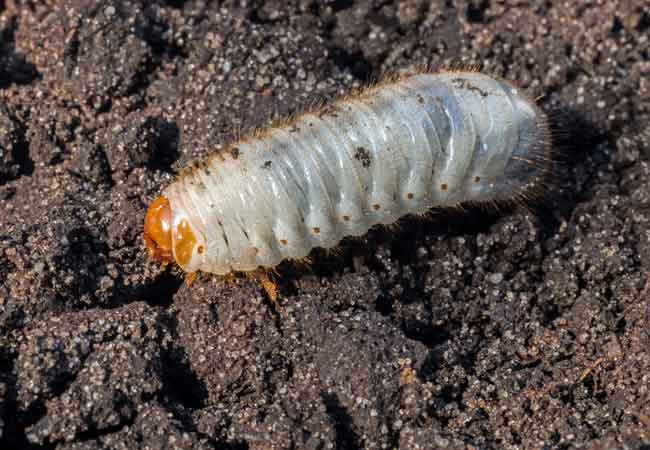
  5. Caterpillar (June bug larva)
The Cooper's Hawk perched atop a foliage-free branch group. A mockingbird kept dive-bombing it. Trying to keep the camera steady at the distance and zoom challenged me.

I wasn't sure that the doe and fawns were the same family until reviewing the video clips. In the second footage of deer, they were much more energetic than in the first footage.

The June bug might have already been dead; I didn't want to prod it to find out. Incidentally, I'd uploaded the bug to LinkedIn with request for ID. The color and pose didn't resemble any of the three olivy green/brown June bugs I pic'd last year ("So How Cute ARE June Bugs?"). Maybe I should have ensured the reddish bug had its total back upward.

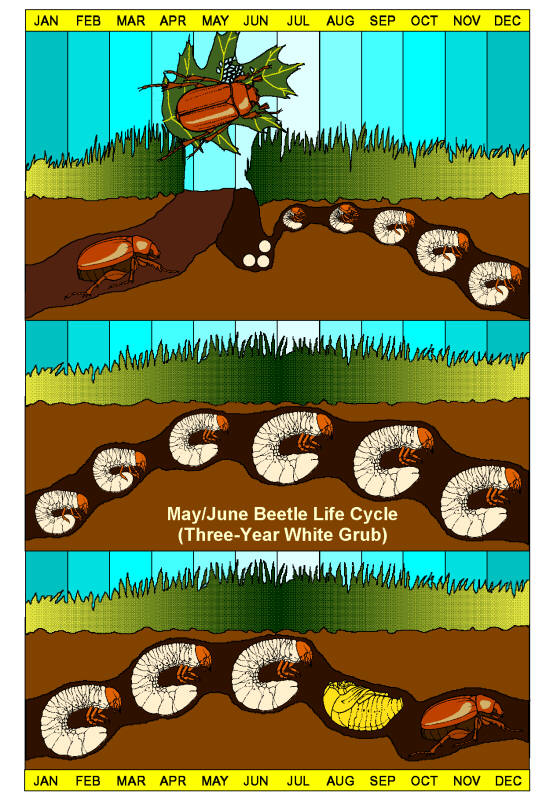
The caterpillar resembled several that I'd shot in April. The undulation movement intrigued me, as well as its prolegs. It took some poking around Google images to find some that resemble my "capture"; I finally found enough info to declare the critter a June bug larva. "Life Cycle Process of a June Bug" shows a basic diagram. "Turfgrass - May/June Beetle Grubs" links to a January-through-December image. Grubs don't sound good to have around. "How To: Get Rid of June Bugs", section "PREVENT DAMAGE FROM GRUBS" has a large image with caution and recommendation: "grubs that will get your grass. Lose the larvae …". Another anti-grub resource: "Grub Worm Identification and Treatment".

This year has been very good for abundant blooms, new-growth plants, and wildlife. View some via the index. Also, I'll be posting more strolling image items to share.

For more articles about deer, enter "deer" in the search box at the upper left of this window. Or find and click "deer" link at Partial Index of Keywords section (just below Popular Posts section). BTW, additional deer videos are available at my YouTube channel.

Wednesday, October 24, 2018

So How Cute ARE June Bugs?

Back in late August, I took a pic of a green bug. Was fortunate that a neighbor was able to ID it for me. Well, he sent me a link that was most helpful. The feature hit went to "June Beetle Time!" (from NCSU). Besides chock full of info and some beautiful images, that site helpfully linked to Bugguide's "Species Cotinis nitida - Green June Beetle" info tab. I was sure glad the Taxonomy tab showed the hierarchy. (When I searched Bugguide.net before finding my neighbor's email, "Family Scarabaeidae - Scarab Beetles" was about as far as I could go before getting really lost.)

It was a little odd that NCSU's article was dated for late July, and my set of three pix are from August. So before talking about its cuteness, we'll address why it's called a June bug. Terminex's "Why are June Bugs Called June Bugs?" explains "June bugs derive their name from the fact that adult June bugs emerge from the soil at the end of spring or the beginning of the summer." The June bug they show looks quite different than the picture I show, probably because of so many species of beetles.
The name "June bug" refers to any of the 100 species of beetles that are related to the scarabs familiar from ancient Egyptian iconography. Other common names for the June bug include "June beetle" and "May beetle." The common June bug is one-half to five-eighths inches long and reddish-brown in color. Being beetles, they also sport shiny wing covers, called elytra.
"What are June Bugs? How Can I Get Rid of June Bugs?" content seems to vacillate between objectiveness and hostility. Helpful info does include short descriptions of what the site lists as the six most common species. (The pix are nice to look at.)
One of the most troublesome bugs – at least for a few weeks each summer – is the so-called June bug. These large and clumsy beetles are attracted to nighttime light, so they can be a pest to any outdoor evening activity you have planned.
"This Month's Bug: The 'June Bug'" has good news and bad news.
June bugs don't bite, sting, or spread disease. The bad news: adult June bugs feed on trees and shrubs, and can cause quite a bit of damage to your landscaping. Even more harmful are the grubs, who live underground and feed on your plant roots, harming plants.
The three previous resources are from pest control companies. They do a reasonable job of describing June bugs and showing pix. They also are ready to help the reader control them. Some informative sites that aren't in the control business:
  • "5 things you need to know about June bugs" is light on content, but has humongous gorgeous bug pic.
  • "Cute as a June Bug" was dated June 2011, plugging a museum event and cited the expression, but no in-depth analysis. The bug pic was large but not so cute.
  • "Cute as a bug?" has much cuter June bugs on a flower, reminding me of emerald color.
  • "Green June Beetle Bug" shows a bug tromping through some grasses. You can see jade-like topside and green-foil-like legs and head.
  • "THE SHINY GREEN JUNE BUG" shows someone handling the bug so you can see top side (matte) and bottom side (glossy).
  • Another June bug expression, which I stumbled on during research: The title says it all:"All Over it like a Duck on a Junebug" "For many Southerners, it’s very picture of eagerness and alacrity:"
June bugs are quite cute in shape and color, especially the underside. Too bad I didn't have the nerve to pick up my specimen for fear of bites or stings. Ignorance on my part. If I see another one in the future, I might muster enough nerve to use a small stick to flip it over and take its pic. After I take the topside pic, natch.